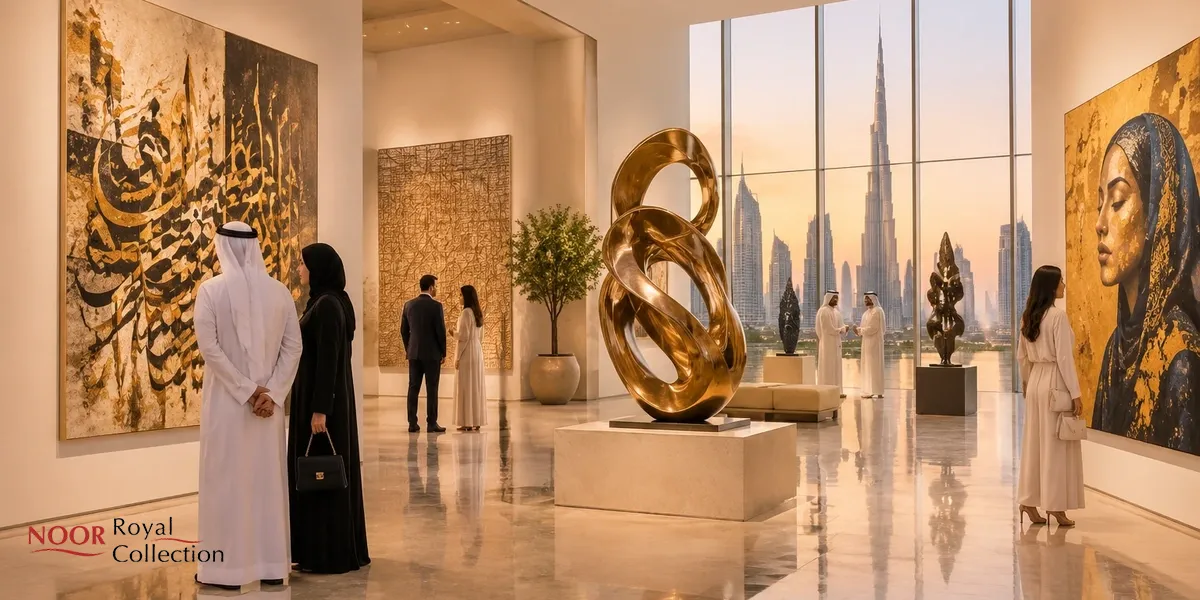
The decision to collect Middle Eastern art is an opportunity to explore one of the world’s most diverse and culturally significant artistic landscapes. From historic manuscripts and traditional calligraphy to experimental installations and contemporary painting, Middle Eastern art reflects centuries of cultural exchange, identity, innovation, and creative expression.
Today, interest in MENA art is growing among private collectors, cultural institutions, and international audiences. Artists from the region are contributing to global conversations about heritage, migration, memory, politics, architecture, and modern identity. For new and experienced collectors alike, this creates an exciting opportunity to discover distinctive artists and build a collection with personal and cultural meaning.
Whether you are beginning your collecting journey or expanding an established collection, this guide explains how to explore Middle Eastern art history, understand different artistic movements, evaluate artworks, and make informed collecting decisions. It also introduces ways to discover regional and international art through Noor Royal Museum in Dubai.
1- Understanding Middle Eastern Art and Its Cultural Heritage
Middle Eastern art is not a single style or movement. It encompasses a wide range of artistic traditions shaped by different countries, languages, religions, communities, and historical experiences. The region’s artistic landscape includes work from the Arab world, Iran, Türkiye, and other culturally connected areas, each with its own visual languages and histories.
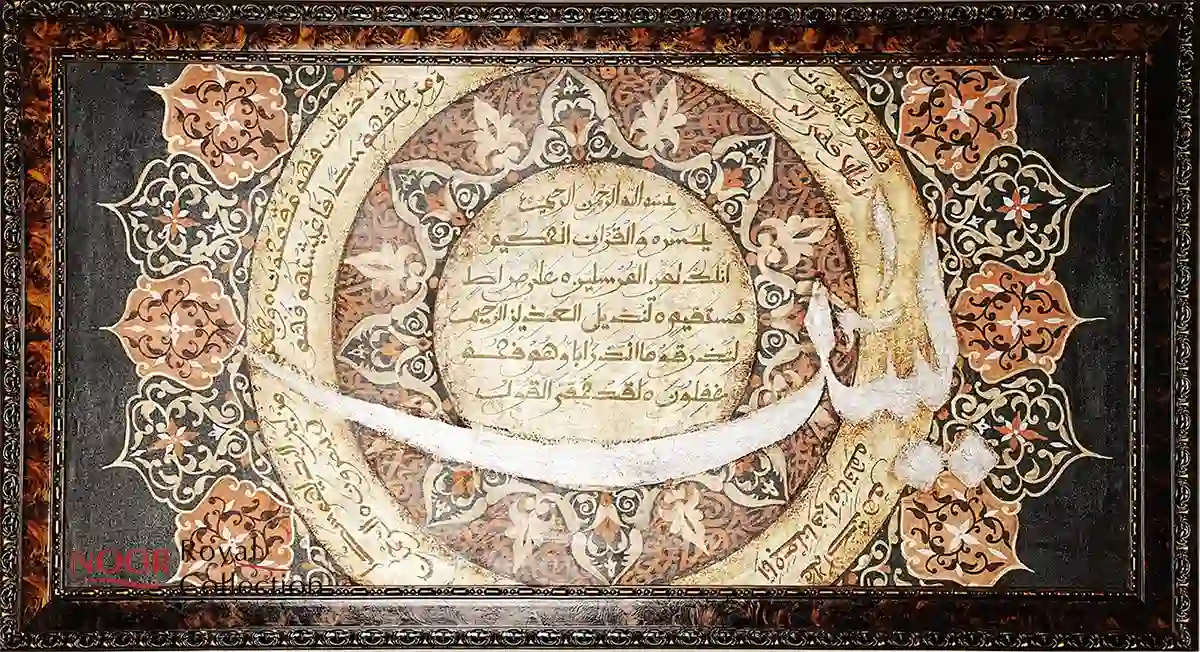
Traditional Middle Eastern art includes calligraphy, geometric patterns, miniature painting, ceramics, textiles, metalwork, carpets, architecture, and manuscript illumination. These practices often combine technical skill with symbolic, spiritual, and cultural meaning.
Islamic art has played an important role in the region’s visual heritage. Calligraphy, for example, developed into a highly refined art form and appears in manuscripts, architectural decoration, ceramics, and other objects. Geometric designs and arabesque patterns also demonstrate sophisticated approaches to repetition, balance, and visual rhythm.
Understanding this background helps collectors appreciate an artwork beyond its appearance. A manuscript, textile, or contemporary painting may reference a particular place, period, technique, or cultural tradition. Researching those connections can make collecting more rewarding and help establish a work’s historical context.
2- Discovering the Diversity of MENA Art
MENA art brings together artists and creative traditions from across the Middle East and North Africa. It is a broad field rather than a fixed aesthetic category, and its diversity is one of its greatest strengths.
Modern and contemporary artists from the region frequently reinterpret traditional forms while engaging with new materials, technologies, and international influences. Some explore calligraphy through abstraction; others use photography, sculpture, installation, video, or mixed media to examine identity, memory, social change, and belonging.
Arab contemporary art is especially varied. Artists may draw inspiration from local landscapes, urban life, literature, architecture, personal histories, or political and social experiences. Their work can be deeply connected to a specific community while also addressing themes that resonate with audiences internationally.
For collectors, this variety offers several possible directions:
- Traditional and heritage works: Manuscripts, calligraphy, ceramics, textiles, and decorative arts.
- Modern regional art: Paintings and sculptures that reflect the development of modern artistic movements across the region.
- Arab contemporary art: Works that explore current cultural, social, and political themes through diverse media.
- Emerging practices: Experimental photography, digital art, installations, and interdisciplinary projects.
Rather than assuming that all art from the region shares the same characteristics, take time to explore individual artists, their backgrounds, and the ideas behind their work.
3- Why Collect Middle Eastern Art?
There are many reasons to collect Middle Eastern art, and financial considerations are only one part of the picture. A meaningful collection often begins with curiosity, personal connection, and a desire to engage with artists and cultural histories.
Cultural connection: Art can preserve stories, traditions, and perspectives that might otherwise receive limited attention. Collecting can support the visibility and appreciation of regional artistic heritage.
Distinctive artistic expression: The combination of historic techniques and contemporary experimentation creates a rich range of visual approaches. Collectors can discover works that offer fresh perspectives and individual character.
Supporting artists: Acquiring work through reputable galleries and directly supporting artists can contribute to a sustainable creative ecosystem. It can also help collectors develop a deeper understanding of an artist’s practice.
Building a focused collection: You can organize a collection around a country, artistic movement, medium, historical period, or recurring theme. A clear direction helps create coherence while leaving room for discovery.
Although some artworks may appreciate, don’t treat art as a guaranteed financial investment. Market demand can change, and resale is never assured. Collect for artistic, cultural, and personal reasons first, and assess financial considerations carefully.
4- How to Start Collecting Middle Eastern Art
If you are new to collecting, begin with research rather than rushing into a purchase. A considered approach helps you identify what interests you and understand what makes an artwork meaningful.
Explore artists and movements.
Read about artists from different parts of the region and explore the historical and contemporary movements that have shaped their work. Visit exhibitions, follow gallery programs, and consult museum collections and scholarly resources.
Define your collecting interests.
Consider whether you are drawn to traditional Middle Eastern art, modern painting, Arab contemporary art, sculpture, photography, or mixed media. You do not need to choose only one category, but identifying your interests can help guide your research.
Visit galleries and exhibitions.
Seeing artworks in person is one of the most valuable parts of collecting. It allows you to assess scale, materials, surface, color, condition, and presentation. Conversations with gallery teams and curators can also provide useful background about artists and individual works.
Set a realistic budget.
Decide what you can comfortably spend, including any additional costs for framing, insurance, shipping, customs, installation, and conservation. Compare works within similar categories, but don’t assume prices alone indicate quality or long-term significance.
Keep records
Maintain a record of every acquisition. Include the artist’s name, title, date, medium, dimensions, purchase details, provenance documentation, condition information, certificates where applicable, and photographs.
5- What Should Middle Eastern Art Collectors Look for?
A strong collecting decision combines personal appreciation with careful research. Before purchasing an artwork, consider the following factors.
Authenticity and attribution: Ask who created the work and what evidence supports the attribution. For works by established artists, seek appropriate certificates, expert opinions, or catalog references when available.
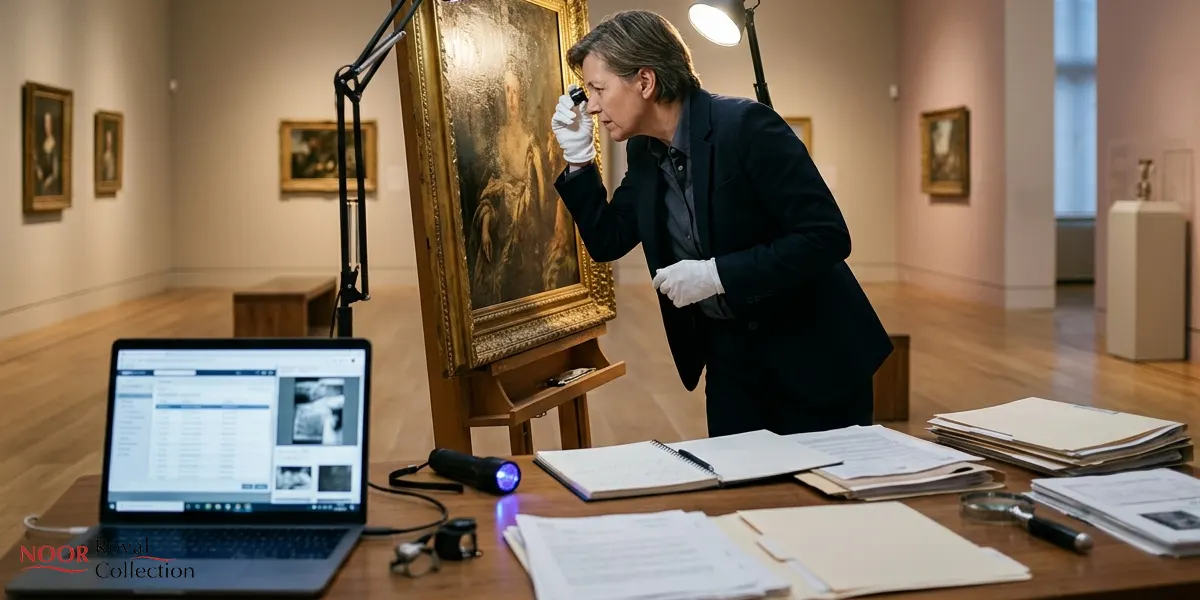
Provenance: Provenance is the documented ownership history of an artwork. Request invoices, previous ownership records, exhibition history, and other supporting documents. A clear provenance record can help establish a work’s history and identify potential ownership concerns.
Condition: Examine the artwork for damage, repairs, fading, alterations, or signs of deterioration. For older works, manuscripts, and delicate materials, professional conservation advice may be appropriate.
Artist’s practice: Learn about the artist’s education, exhibitions, materials, themes, and place within the wider art landscape. Understanding a work’s context can deepen your appreciation of it.
Documentation and legal considerations: Confirm that the seller has the right to sell the work. For antiquities, manuscripts, and culturally significant objects, pay particular attention to ownership history, export permissions, import rules, and any applicable cultural heritage regulations.
A reputable gallery should be willing to answer reasonable questions and provide documentation appropriate to the artwork.
6- Where to Find Middle Eastern Art for Sale
Collectors can discover Middle Eastern art through established galleries, specialist dealers, art fairs, auctions, artist studios, and cultural institutions. Each channel offers different opportunities and requires its own level of research.
Galleries can be particularly useful for collectors who want guidance, access to curated exhibitions, and information about artists. Specialist dealers may focus on particular periods, regions, or media. Auctions can offer access to a broad range of works, but buyers should review condition reports, provenance, fees, and sale terms before bidding.
Online platforms can make discovery easier, especially when researching artists across different countries. However, photographs cannot always convey an artwork’s true scale, texture, or condition. Whenever possible, inspect important works in person or arrange an independent assessment.
If you are searching for Middle Eastern art for sale, prioritize transparency. Ask for a written description, price, condition details, provenance information, and clear purchase terms. Avoid making decisions based solely on promotional claims or promises of future appreciation.
7- Dubai as a Destination for Art Collectors
Dubai offers an international setting in which collectors can encounter artists, galleries, exhibitions, and cultural initiatives from the Middle East and beyond. Its position as a meeting point for different communities makes it a useful place to explore a broad range of artistic perspectives.
For collectors, visiting exhibitions is more than an opportunity to view individual works. It is a chance to compare artistic approaches, learn about new practices, speak with gallery professionals, and better understand the wider art community.
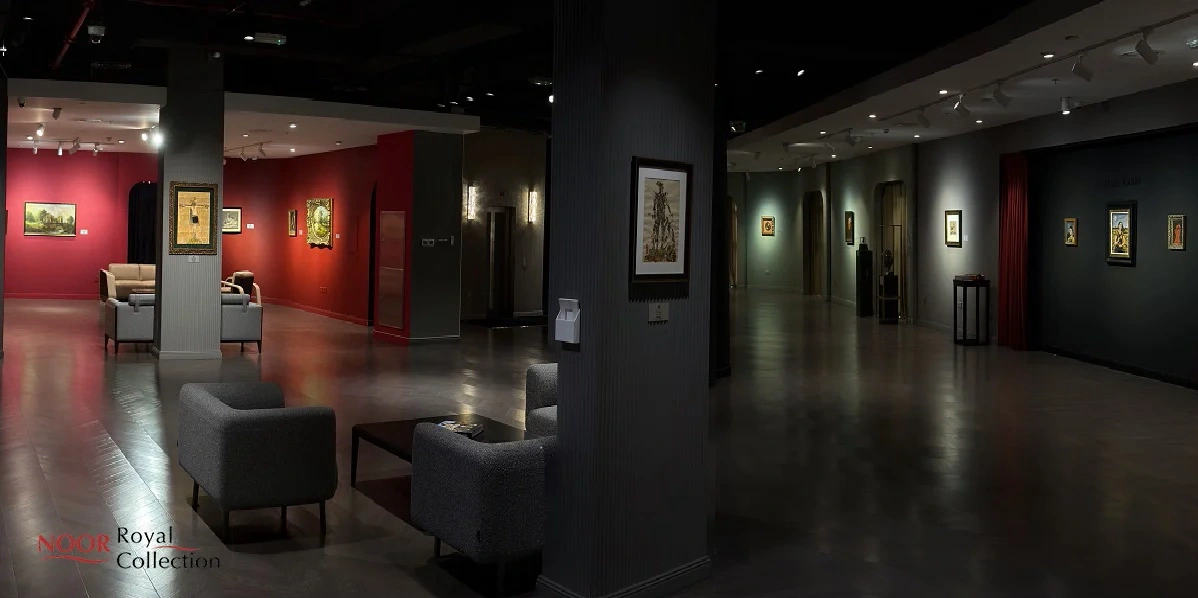
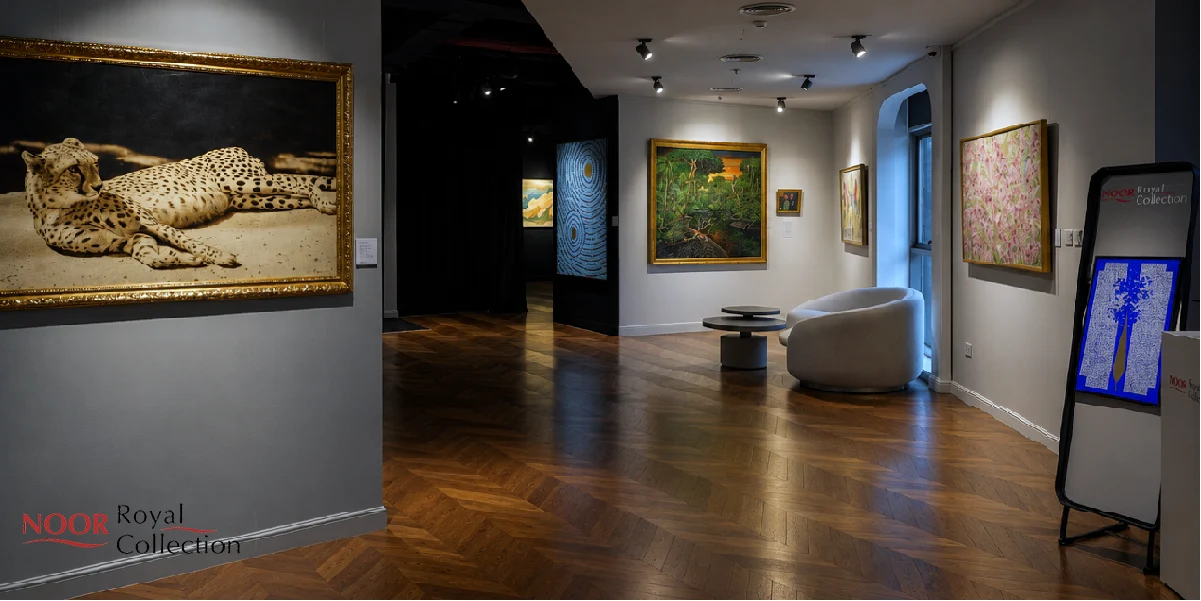
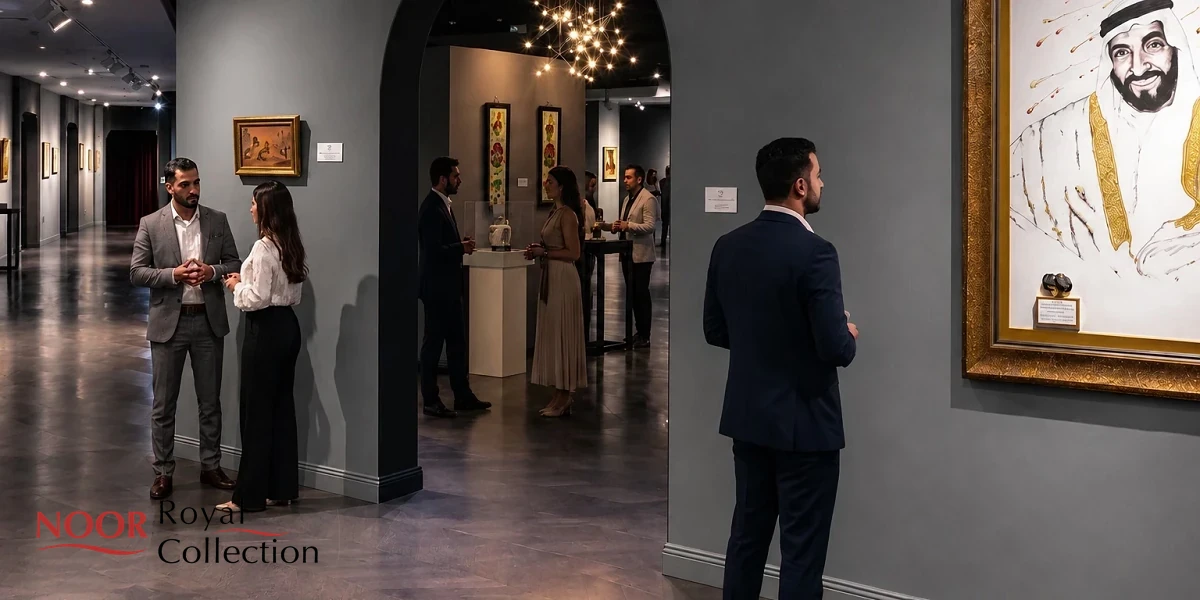
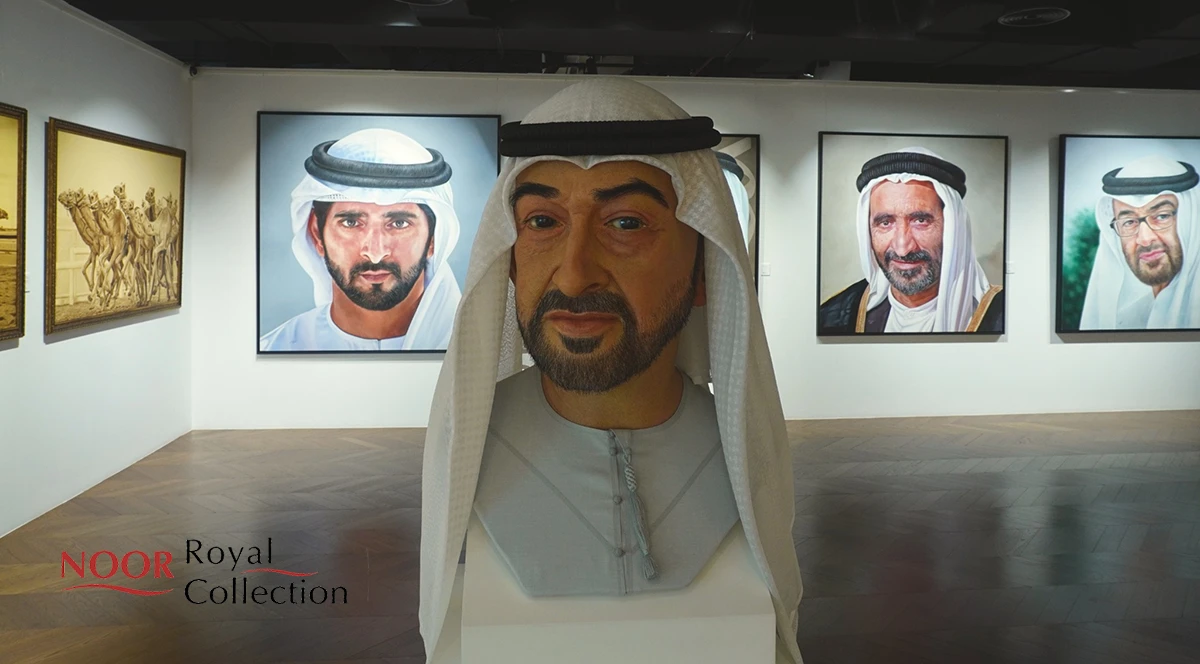
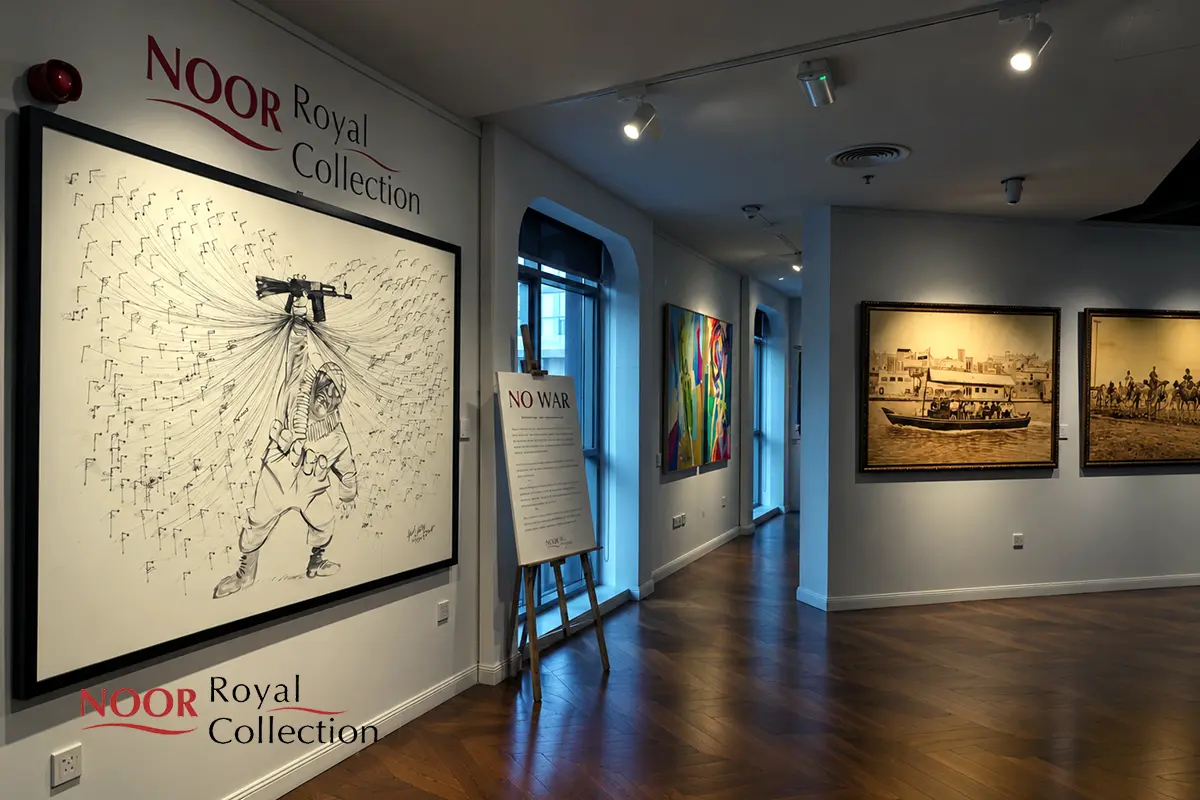
Noor Royal Museum and Noor Royal Collection, located at No. 235, Jumeirah 2, Dubai, present a program spanning paintings, sculpture, installations, photography, digital art, and cultural events. The organization also describes collector-focused services such as art advisory, collection building, and educational programs.
Visitors can explore the Noor Royal Collection homepage to learn more about its artistic program and collection, and consult the events calendar for exhibition announcements and activities. Because exhibition schedules and access arrangements may change, check the latest details before visiting.
8- Building a Meaningful Collection for the Long Term
A thoughtful collection develops over time. Instead of buying many works quickly, allow your interests to evolve through research, exhibition visits, and conversations with artists and specialists.
You might begin with a particular medium, such as painting or photography, and gradually expand into related practices. Alternatively, you may build a collection around themes such as cultural memory, architecture, calligraphy, identity, or the relationship between tradition and modernity.
Consider how each new acquisition relates to the works you already own. Does it introduce a new perspective? Does it deepen an existing theme? Does it represent an artist or period you want to understand better?
Care for the collection is equally important. Use appropriate framing, lighting, storage, and environmental conditions for each medium. Keep documentation organized, review insurance needs, and seek professional conservation advice when necessary.
Most importantly, remain open to discovery. The most rewarding collections often take shape through sustained curiosity rather than a fixed idea of what a collector should own.
Visit Noor Royal Museum in Dubai
Collecting Middle Eastern art begins with looking closely, asking informed questions, and developing a genuine connection with the work. Whether your interests lie in traditional Middle Eastern art, historic manuscripts, modern painting, or Arab contemporary art, exploring exhibitions in person can help you discover new artists and perspectives.
We invite you to visit Noor Royal Museum in Dubai and experience its artistic environment. Discover the collection, explore current exhibitions, and learn more about the gallery’s approach to art and collection building.
To plan your visit or enquire about exhibitions and collector services, contact Noor Royal Museum. We look forward to welcoming you.
Frequently Asked Questions
What is Middle Eastern art?
Middle Eastern art describes a diverse range of artistic traditions and practices connected to the Middle East. It includes historic manuscripts, calligraphy, ceramics, textiles, painting, sculpture, photography, and contemporary art.
Is MENA art the same as Arab art?
No. MENA stands for Middle East and North Africa and includes countries and cultures beyond the Arab world. Arab art is associated with Arab communities and cultural contexts, while MENA art is a broader regional term.
How can beginners start collecting Middle Eastern art?
Start by researching artists and movements, visiting galleries and exhibitions, setting a realistic budget, and asking sellers about authenticity, provenance, and condition. Begin with works that genuinely interest you.
Where can I find Middle Eastern art for sale?
You can explore established galleries, specialist dealers, art fairs, artist studios, and reputable auction houses. Always review the artwork’s documentation, condition, ownership history, and purchase terms.
Why should I visit Noor Royal Museum in Dubai?
A visit offers an opportunity to experience a curated art environment in Dubai and explore the organization’s exhibitions and artistic program. Check the official website or contact the team for current exhibition and visitor information.