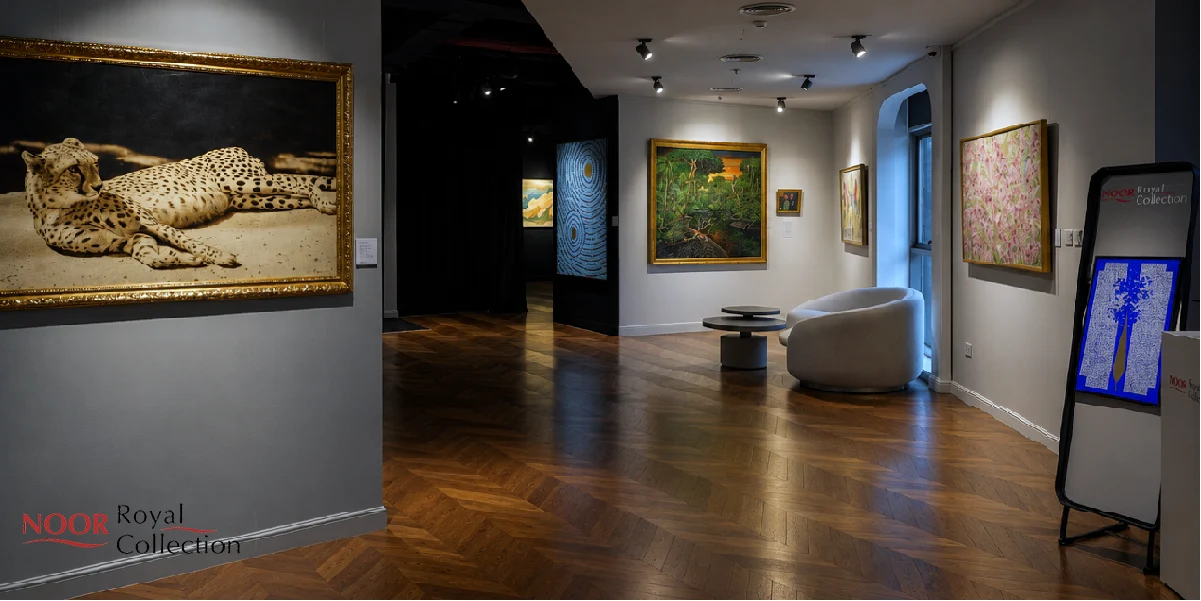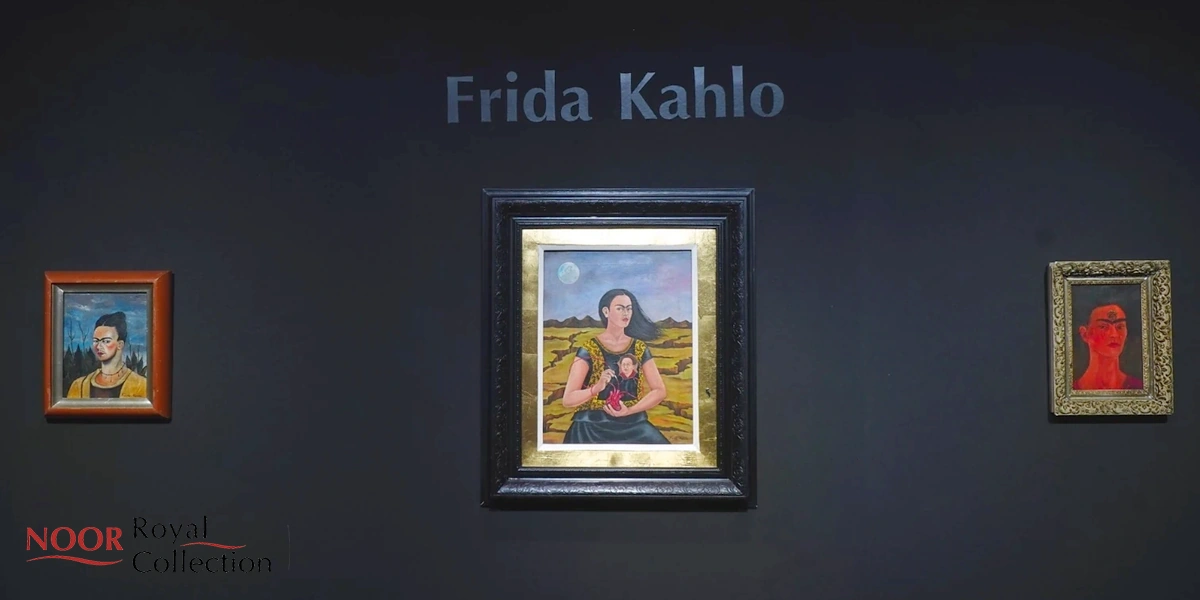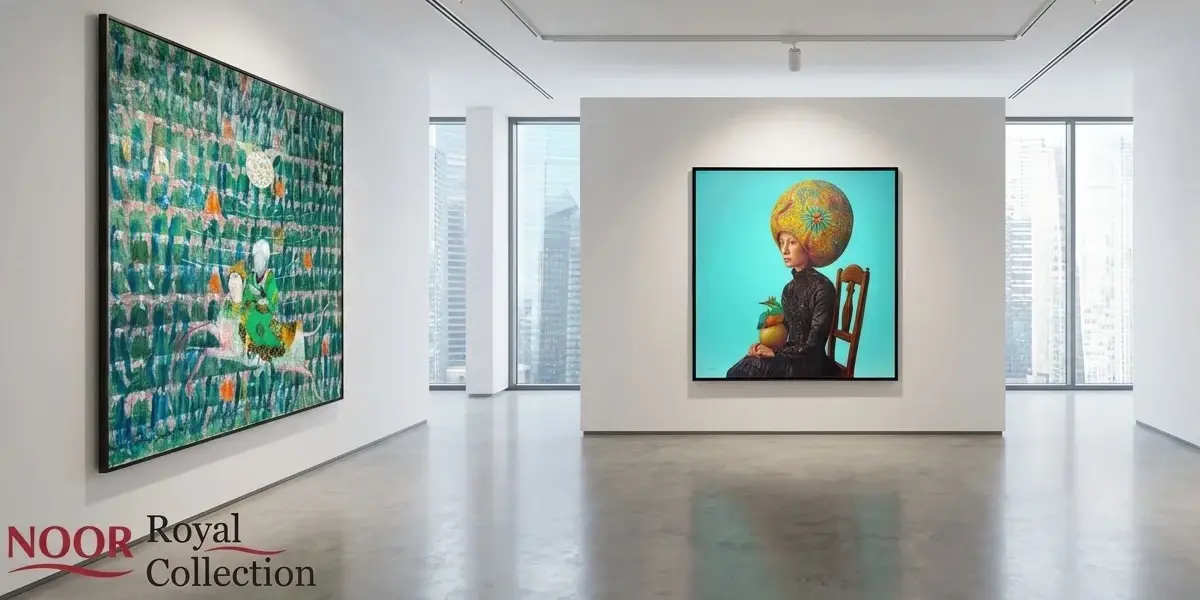

Walk into a gallery, art fair, auction room, or private collection and you will quickly discover something fascinating: two artworks can look equally compelling while having completely different levels of collectibility. One may be beautifully executed but have little documented history, limited market demand, or uncertain provenance. Another may be less immediately attractive to the casual viewer yet command serious attention from experienced collectors because of its rarity, artistic importance, condition, exhibition history, and connection to a significant artist’s career. So, what makes art collectible when personal taste is only one piece of the puzzle? The answer lies in the combination of qualities that give an artwork significance beyond the moment of purchase. Collectible art usually sits at the intersection of artistic merit, scarcity, authenticity, documentation, cultural relevance, and an established or emerging collector market. None of these factors guarantees future appreciation, and no responsible collector should treat an artwork as a guaranteed financial investment. Instead, they provide a framework for understanding why certain works attract sustained attention while others remain primarily decorative purchases. The contemporary market also demonstrates why context matters. The global art market reached an estimated $59.6 billion in 2026, up 4% from 2025, with public auction sales rising 9% and dealer sales increasing 2%. That growth does not mean every artwork became more valuable; it shows that collectors continue to make nuanced choices across artists, mediums, price levels, and markets. Learning to recognize those nuances is one of the most useful skills an aspiring collector can develop.
Collectibility Is More Than Loving the Image
Personal taste should never be dismissed. In fact, it is often the reason anyone begins collecting art in the first place. You see a painting, sculpture, photograph, or mixed-media work and something happens: you pause, look again, and imagine living with it. That emotional response is valuable because collecting is not simply a spreadsheet exercise. Yet experienced collectors learn to separate the question “Do I love this?” from the question “Why is this work important?” Those questions can lead to the same answer, but they do not have to. An artwork can be personally moving and still have limited collectibility because it lacks documentation, exists in large numbers, has weak market recognition, or occupies an insignificant place in the artist’s practice. Conversely, an artwork can be historically important even if it does not immediately match your interior style or personal aesthetic. Think of collectibility like a building: taste might be the front door, but provenance, rarity, quality, condition, and cultural significance are the foundations underneath it. Current collector behavior reinforces the importance of looking beyond a single sales channel or trend. According to the 2025 Art Basel and UBS collecting survey, 83% of surveyed high-net-worth individuals had bought through galleries, dealers, social media, or art fairs, while 58% made purchases connected to art fairs. That breadth of activity shows how many different routes collectors use to discover works. A thoughtful collector therefore develops curiosity before developing certainty, asking what makes a work significant rather than simply asking whether the work looks good on a wall.
Taste Starts the Conversation, but Context Builds Collectibility
Imagine discovering a beautiful first edition of a book. You may love the cover, but if you learn that it was printed in a tiny first run, owned by an important literary figure, documented in an archive, and preserved in exceptional condition, your understanding changes. Art works in much the same way. Context gives an object depth. A painting’s subject, date, medium, scale, place within the artist’s development, exhibition history, and relationship to other important works can all change how collectors understand it. This is why collectible art should be approached almost like visual research. The image is the beginning of the story, not necessarily the whole story. An experienced collector may ask whether the work represents a breakthrough period, whether the artist returned to the subject repeatedly, whether comparable works are held in respected collections, and whether the piece demonstrates qualities associated with the artist’s strongest output. These questions do not eliminate emotion; they enrich it. The more you understand the work, the more precisely you can explain why it belongs in a collection. This distinction is especially important for newer collectors who may encounter aggressive claims about “investment-grade” art online. Marketing language can make almost anything sound rare or important. Independent verification, careful documentation, and an understanding of the artist’s wider career provide a much stronger basis for judgment.
1-The Artist’s Reputation and Market Position
The first major factor is the artist. That does not mean only celebrity status. An artist’s reputation develops through a complex combination of critical reception, exhibitions, institutional relationships, gallery representation, collector demand, scholarship, public visibility, and the strength of the artist’s body of work. A famous name can certainly create immediate demand, but established reputation is only one end of the spectrum. Emerging artists can become highly collectible when respected curators, galleries, museums, critics, and informed collectors begin recognizing the importance of their work. The key is to look at the trajectory rather than a single moment. Is the artist consistently exhibiting? Are reputable institutions acquiring or presenting the work? Does the artist have a coherent practice rather than simply a viral following? Are serious galleries investing resources in developing the artist’s career? These questions can reveal whether market attention has substance behind it. The artist market also needs to be considered carefully because markets change. An artist may experience a sudden surge of popularity followed by a correction, while another may develop slowly over decades. The goal of collector education is not to predict these movements perfectly but to understand the forces behind them. Sotheby’s recent guidance on editioned works similarly emphasizes that edition size, condition, provenance, and the artist’s market need to be evaluated together rather than in isolation. In practical terms, the strongest collectible works often benefit from an artist whose reputation has both artistic substance and a credible ecosystem of institutional and market support.
Why an Artist’s Career Trajectory Matters
An artist’s career trajectory can sometimes tell you more than today’s headline price. Consider two hypothetical artists who both sell paintings for $50,000. Artist A has received major exhibitions, developed a distinctive visual language over twenty years, entered respected collections, and produced a relatively consistent body of important work. Artist B became popular online six months ago because a particular series went viral. Both may be talented, and either could become more significant, but the evidence supporting their current collectibility is different. Collectors should therefore investigate the pattern behind recognition. Look for sustained exhibitions, serious critical discussion, meaningful gallery representation, museum or foundation involvement, and evidence that the artist’s strongest works are being preserved in significant collections. It is also useful to understand whether an artist’s market has depth. A market with multiple collectors, galleries, institutions, and geographic centers may be more resilient than one dependent on a small number of speculative buyers. That does not make the former automatically safer or more valuable, but it gives the collector a richer context. Today’s market is also more accessible than ever, which creates both opportunity and noise. The 2026 global collecting survey found that 63% of surveyed HNWIs had purchased at least one work directly from an artist, while direct artist sales represented 20% of expenditure by value. Direct access can be wonderful, but it also makes research more important. A collector should understand not only who made the work, but where that artist sits within the larger art ecosystem.
2-Provenance and Ownership History
Art provenance is essentially the documented history of an artwork’s ownership and movement through time. It can include previous owners, galleries, dealers, auction houses, exhibitions, publications, estates, foundations, and other records that establish where a work has been. Provenance matters because an artwork’s history can strengthen confidence in its authenticity and place it within a broader cultural narrative. Imagine two identical paintings by the same artist. One has a documented chain of ownership beginning with the artist’s studio, followed by a respected gallery and a known private collection. The other has little information about where it came from. Even before considering price, the first work gives a collector more confidence and context. Strong provenance can also reveal that a work has been exhibited or published, which may add another layer of significance. It is important, however, not to treat provenance as a magical certificate of value. A famous previous owner does not automatically make an artwork important, just as the absence of a glamorous name does not automatically make a work undesirable. Provenance needs to be assessed alongside authenticity, condition, artistic significance, and the reliability of the documentation. For a collector, the lesson is simple: never be embarrassed to ask for paperwork. Good documentation is not bureaucracy standing between you and the art; it is part of understanding what you are buying.
What Strong Art Provenance Looks Like
Strong provenance usually has a logical chain rather than unexplained gaps. Ideally, documents such as invoices, gallery records, auction catalogues, exhibition labels, certificates, estate records, or published references can help establish the work’s history. Depending on the artist and period, there may also be catalogue raisonné references, archival documentation, authentication records, or correspondence connected to the artwork. The quality of the evidence matters. A handwritten note claiming that a work belonged to a famous person is not equivalent to a verifiable gallery invoice or published catalogue entry. Collectors should also remember that provenance can be incomplete for perfectly legitimate reasons, particularly with older works or artworks that have remained in private collections for decades. The objective is not to demand an impossible paper trail but to understand what evidence exists and how reliable it is. When buying significant works, professional due diligence can be worthwhile. Ask who authenticated the work, whether the artist’s estate or foundation has recognized it where relevant, whether it has appeared in authoritative publications, and whether any restrictions or disputes surround its ownership history. This is one reason a trusted art advisor or established gallery can be valuable: experienced professionals know which questions to ask before a transaction becomes irreversible. Provenance also becomes especially important when an artwork crosses borders, enters a major collection, or is later offered at auction. The more valuable or historically important the work, the more carefully its documentary story should generally be examined.
3-Rarity, Scarcity, and Edition Size
Rarity is one of the most misunderstood concepts in collecting. People often assume that the fewer examples that exist, the more valuable the artwork must be, but scarcity only becomes meaningful when there is demand. An edition of five hundred by an unknown artist may be less collectible than a unique painting by an established artist, while an edition of twenty by a highly sought-after artist can be fiercely competitive. Rarity should therefore be understood in relation to significance. Is this one of only a few works from an important period? Is it a unique composition? Is the subject unusual within the artist’s practice? Is it one of a small number of surviving examples? Does the edition have special characteristics that collectors recognize? These questions are more useful than simply counting objects. Even an artist proof is not automatically more desirable simply because it is an artist proof. The same principle applies broadly to collectible art. Scarcity can create competition, but scarcity without desirability is just limited supply. The collector’s job is to understand why the object is scarce and why people might continue caring about that scarcity.

4-Artistic Quality and Significance
Art quality is difficult to measure with a single formula, but that does not mean it is meaningless. Experienced collectors learn to look closely at execution, composition, material choices, originality, technique, conceptual strength, and the relationship between the work and the artist’s broader practice. A technically impressive painting is not automatically important, and a deliberately rough work is not automatically weak. Contemporary art frequently challenges conventional definitions of beauty or craftsmanship, so quality must be judged according to the intentions and language of the artist. One useful question is whether the work feels necessary within the artist’s career. Does it reveal an idea particularly clearly? Does it represent a breakthrough? Does it demonstrate the artist’s mature technique? Does it stand out among comparable works? Art historians and curators often assess these relationships over time, which is why institutional context can be so helpful to collectors. A work that initially seems strange may become more understandable after seeing how it connects to an artist’s earlier experiments and later developments. This is also why buying only because something is “beautiful” can be limiting. Beauty is powerful, but collectibility can arise from tension, innovation, historical importance, intellectual depth, or technical achievement. The strongest collections often contain works that reward repeated looking. Like a good book, a significant artwork can reveal more each time you return to it.
Looking Beyond Surface Beauty
When assessing a work, try giving yourself time before asking whether you like it. Look at the composition, scale, materials, surface, texture, details, and visual rhythm. Ask what changes when you stand close to the work and what changes when you step back. Consider whether the artist’s technique supports the idea or merely decorates it. Then place the artwork within its historical and professional context. A collector might discover that a seemingly simple composition was created during a pivotal period in the artist’s career or represents an important departure from earlier work. That context can transform the experience. Museums are particularly useful teachers because they encourage viewers to understand works through relationships: one artist beside another, one movement beside another, one historical period influencing the next. Private collectors can create a similar habit. Keep notes, visit exhibitions, compare works, and speak with knowledgeable professionals. Over time, your eye becomes more educated. You begin to notice quality before someone tells you what to notice. That does not mean developing a single “correct” taste. Art history is full of disagreement, and serious collectors can reasonably disagree about what deserves attention. The goal is to build enough knowledge to explain your own judgment. When you can say why a work matters—not simply why it matches your sofa—you are already thinking more like a collector.
5-Condition, Conservation, and Authenticity
Condition can have a major influence on collectibility because artworks are physical objects that age, and aging does not affect every material equally. Paint can crack, pigments can fade, paper can discolor, photographs can deteriorate, sculptures can suffer surface damage, and improper framing can create long-term problems. Restoration may preserve a work, but extensive intervention can also influence how collectors perceive it. The important question is not whether an artwork has ever been restored; many historically important works have. Instead, collectors should understand what happened, when it happened, who carried out the work, and whether the intervention was appropriate. Authenticity is equally fundamental. A beautifully executed artwork without credible authentication is not equivalent to a securely documented work by the same artist. Depending on the artist and period, authentication may involve specialist opinion, catalogue raisonné references, estate documentation, scientific analysis, provenance, or other forms of evidence. Sotheby’s recent guidance emphasizes condition alongside provenance as a major factor in assessing editioned works and explains that issues such as fading, staining, creasing, restoration, and improper framing can materially affect desirability. For significant purchases, condition reports and specialist inspections can be worthwhile. Think of this stage as a building inspection before buying a historic house. The charm is still important, but you want to know what lies beneath the surface.
6-Exhibition, Publication, and Institutional Recognition
An artwork’s relationship with respected institutions can add meaningful context to its collectibility. Exhibition history demonstrates that curators, galleries, museums, foundations, or scholars have considered the work significant enough to present publicly. Publication can be similarly useful because an artwork reproduced in a catalogue, monograph, academic publication, or authoritative reference becomes part of the documented history of the artist. This does not mean that museum ownership is a requirement for collectible art. Thousands of excellent works will never enter a museum, and museums have limited space and changing collecting priorities. Still, institutional recognition can be an important signal, particularly when it is connected to a meaningful body of scholarship. An art museum also provides something that a commercial marketplace cannot always provide: historical perspective. In a museum, an artwork is not simply presented as a product. It is positioned within an artistic, cultural, or historical narrative. Collectors can borrow this mindset by asking where a particular work fits within that narrative. Was it created during a pivotal movement? Did it influence later artists? Does it document an important cultural moment? Has it been included in significant exhibitions? These questions help separate lasting relevance from temporary marketing. They also make collecting more intellectually rewarding because the collector begins to think of the collection as a form of cultural stewardship rather than merely ownership.
7-Market Demand and Long-Term Relevance
Market demand matters because collectibility exists partly within a community of people who recognize and pursue particular works. That demand can appear through gallery sales, auction results, institutional acquisitions, art fairs, private transactions, and collector networks. But demand should not be confused with hype. A sudden increase in prices may reflect speculation, limited supply, celebrity attention, or temporary fashion rather than durable importance. Looking at the longer pattern is usually more informative. Are collectors returning to the artist over multiple years? Do major galleries continue to represent the work? Are museums and scholars engaging with the artist? Are important works entering respected collections? Is demand geographically diverse or dependent on one small group of buyers? These questions provide a better picture of market depth. The current market illustrates why this broader view matters. In other words, even a growing market contains winners, losers, corrections, and changing tastes. A collector should therefore avoid buying simply because prices are rising. A work can be collectible without being a short-term investment, and a work that appreciates rapidly can later decline. Long-term relevance is stronger when artistic significance and collector demand reinforce one another.
8- Cultural, Historical, and Emotional Significance
The final factor brings us back to the human side of collecting. Cultural and historical significance can make an artwork important because it captures something about a community, era, movement, place, identity, or shared experience. A work might document a rapidly changing city, preserve a cultural tradition, challenge social assumptions, or embody an artist’s response to a defining historical moment. Emotional significance can be just as powerful, especially in private collections. A work may remind someone of a place, family history, personal journey, or cultural heritage. These qualities are not easily reduced to auction statistics, and they should not be. Collecting art is ultimately an act of assigning meaning. The mistake is believing that emotional attachment and serious collecting are opposites. They can strengthen each other when the collector understands why the work matters. This is particularly relevant to collectors building collections around regions or cultural narratives. A work connected to the Middle East, for example, may carry layers of significance that are invisible to someone evaluating it only through Western market benchmarks. Collectibility can therefore emerge from a combination of artistic achievement and cultural voice. When a work tells a story that remains relevant, its importance can extend well beyond the room in which it hangs. That is one reason the best collections often feel coherent: the individual works speak to one another, creating a larger cultural narrative.
How Art Dubai and Global Art Hubs Influence Collectibility
Dubai has become an increasingly important meeting point for collectors, galleries, artists, institutions, and cultural organizations connecting the Middle East, Asia, Africa, Europe, and beyond. For collectors interested in art Dubai and the wider regional scene, this creates opportunities to encounter artists and practices that may not receive the same exposure in established Western markets. Art fairs and cultural events can be valuable discovery environments because they allow collectors to compare artists, galleries, mediums, and price points in a concentrated setting. Yet a fair booth should be treated as the beginning of research rather than the end. Ask what exhibitions the artist has had, which institutions have engaged with the work, how the artist’s career is developing, and whether the gallery has a long-term relationship with the artist. The broader global market is becoming increasingly connected, but it remains geographically concentrated: the US, UK, and China accounted for 76% of global art sales by value in 2025. That concentration makes regional ecosystems particularly interesting for collectors looking beyond the traditional centers. Dubai can function as a bridge between markets, allowing collectors to encounter different artistic languages and networks. The opportunity is not simply to buy something from a fashionable location. It is to understand the artists, cultural histories, institutions, and collector communities developing there. That context can help identify works with genuine significance rather than merely geographic novelty.
What an Art Museum Can Teach a New Collector
If you want to become better at collecting, spend time in museums without trying to buy anything. It sounds obvious, but it is remarkably effective. A museum gives you the chance to compare major works across periods, movements, cultures, and artists while removing the immediate pressure of a sales conversation. Pay attention to which works keep pulling you back. Then ask yourself why. Is it the composition, material, scale, historical context, technical achievement, emotional atmosphere, or something you cannot yet articulate? That uncertainty is useful. It tells you where to investigate. Museum labels and catalogues can also teach you how professionals describe artworks. Notice the emphasis on date, medium, provenance, exhibition history, artist biography, and historical context. Those are precisely the kinds of information that help collectors understand collectible art beyond visual appeal. Museums can also teach humility. Works that initially seem ordinary may become extraordinary when you understand their influence, while visually spectacular pieces may have a narrower historical role. Developing this kind of visual literacy takes time, but it is one of the most valuable forms of collector education. You do not need an art-history degree to become knowledgeable. You need curiosity, repetition, good questions, and a willingness to admit when you do not know something.
A Practical Collectibility Checklist
Before purchasing a potentially collectible artwork, step back from the excitement of the sale and evaluate the work systematically. Start with the artist: understand the career, reputation, market, and place of the work within the artist’s practice. Then examine the artwork itself: date, medium, dimensions, edition status, quality, condition, and authenticity. Next, investigate its history, including provenance, previous ownership, exhibitions, publications, and certificates or other documentation. Finally, consider the market environment. Who is collecting the artist? Which galleries represent the work? Are institutions paying attention? Is demand broad or concentrated? A useful checklist might include the following questions:
- Who made it, and why does the artist matter?
- Where does this work sit within the artist’s career?
- Is the work unique, rare, or part of a clearly documented edition?
- What is known about its provenance and authenticity?
- What is its current condition, and has it been restored?
- Has it been exhibited or published?
- What institutions, galleries, scholars, or collectors recognize the artist?
- Is current demand supported by long-term artistic relevance?
- Does the work contribute something meaningful to the collection?
- Would you still value the work if its market price remained unchanged?
The final question may be the most revealing. If the answer is yes, you have probably found a stronger foundation for collecting. Market knowledge helps you make an informed purchase, but genuine engagement is what gives a collection its identity.
Questions to Ask Before Buying Collectible Art
A private consultation can be especially useful when a collector is evaluating an unfamiliar artist, a significant acquisition, or a work with complicated provenance. The purpose is not simply to receive a yes-or-no recommendation. A good consultation should help you understand the reasoning behind the opportunity: the artist’s position, the work’s significance, documentation, condition, market context, and potential role within your collection. This is particularly valuable in markets where new galleries, emerging artists, international fairs, and established names overlap. The modern collector has more access than ever before, but access without context can become overwhelming. The 2025 collecting survey found that galleries and dealers remained the most frequently used buying channel, while direct purchases from artists were also expanding rapidly. That means collectors increasingly need the ability to compare information from multiple sources rather than relying on a single sales pitch. If you are considering building or refining a collection, a specialist can help translate broad market information into a more focused acquisition strategy. For collectors exploring established and emerging artists, regional art scenes, or works with particular cultural significance, this kind of guidance can turn a purchase into a considered collecting decision. To explore your options, book a private consultation with Noor Royal Collection and discuss the kind of collection you want to build.
Conclusion
So, what makes art collectible? It is rarely one spectacular characteristic. Collectibility is usually created by the interaction of several factors: the artist’s reputation, the work’s provenance, rarity, artistic quality, condition, authenticity, institutional recognition, market demand, and cultural significance. Personal taste remains important because collecting without emotional connection can quickly become an exercise in following other people’s opinions. But taste becomes much more powerful when supported by knowledge. The collector who understands why a work matters can make decisions with greater confidence and is less likely to be distracted by temporary hype. Current market data makes this especially relevant. The global art market returned to growth in 2026, reaching an estimated $59.6 billion, yet the recovery was uneven and remained below the previous peak. That environment rewards thoughtful research rather than blind optimism. Whether you are exploring art Dubai, visiting an art museum, attending an international fair, or considering a work from a private collection, the same principle applies: look beyond the image. Ask about the artist, the history, the object, the evidence, and the meaning. A truly compelling collectible artwork does not merely look good today. It has a story, a context, and a significance that can continue to reward attention long after the purchase has been made.
FAQs About What Makes Art Collectible
- What makes art collectible rather than simply decorative?
Collectible art generally has significance beyond its decorative appeal. Factors such as the artist’s reputation, rarity, provenance, authenticity, artistic quality, condition, exhibition history, cultural relevance, and collector demand can all contribute to collectibility. A decorative artwork may be chosen primarily because it complements a space, while a collectible work is typically considered within a broader artistic and cultural context. The two categories can overlap, of course. An artwork can be both beautiful enough to transform a room and significant enough to hold a meaningful place in a serious collection.
- Does an expensive artwork automatically qualify as collectible art?
No. Price is evidence of what someone was willing to pay at a particular moment, not a permanent guarantee of significance or future demand. An expensive work can be collectible because of the artist, provenance, rarity, quality, and market position, but high price alone does not create those qualities. Collectors should investigate why the work commands its price and whether that reasoning is supported by credible evidence. This is particularly important when buying works surrounded by short-term hype.
- How important is art provenance?
Art provenance can be extremely important because it helps establish an artwork’s ownership history and can support authenticity and market confidence. Strong provenance may include gallery records, invoices, auction catalogues, exhibition histories, publications, estate documentation, or other credible records. However, provenance should be evaluated alongside condition, authenticity, artistic significance, and market context. A prestigious previous owner can add interest, but provenance does not automatically make an otherwise insignificant work important.
- Are emerging artists worth collecting?
Emerging artists can be highly rewarding to collect, both intellectually and culturally, but they generally require careful research because their markets are less established. Look for originality, technical or conceptual strength, a coherent practice, serious exhibitions, credible gallery support, and signs of meaningful institutional or critical engagement. Avoid assuming that social-media visibility automatically translates into lasting significance. Emerging-artist collecting is often best approached with a long-term mindset rather than an expectation of immediate financial returns.
- How can I evaluate a collectible artwork before buying it?
Start by researching the artist and the artwork’s place within the artist’s career. Then investigate provenance, authenticity, condition, rarity or edition information, exhibition and publication history, and current market demand. Compare the work with other significant examples by the same artist rather than evaluating it in isolation. If the acquisition is substantial or the documentation is complicated, consider seeking independent professional advice. Most importantly, ask whether you would still be pleased to own the artwork if its market value never changed. If the answer is yes, you are beginning from a strong collector mindset.