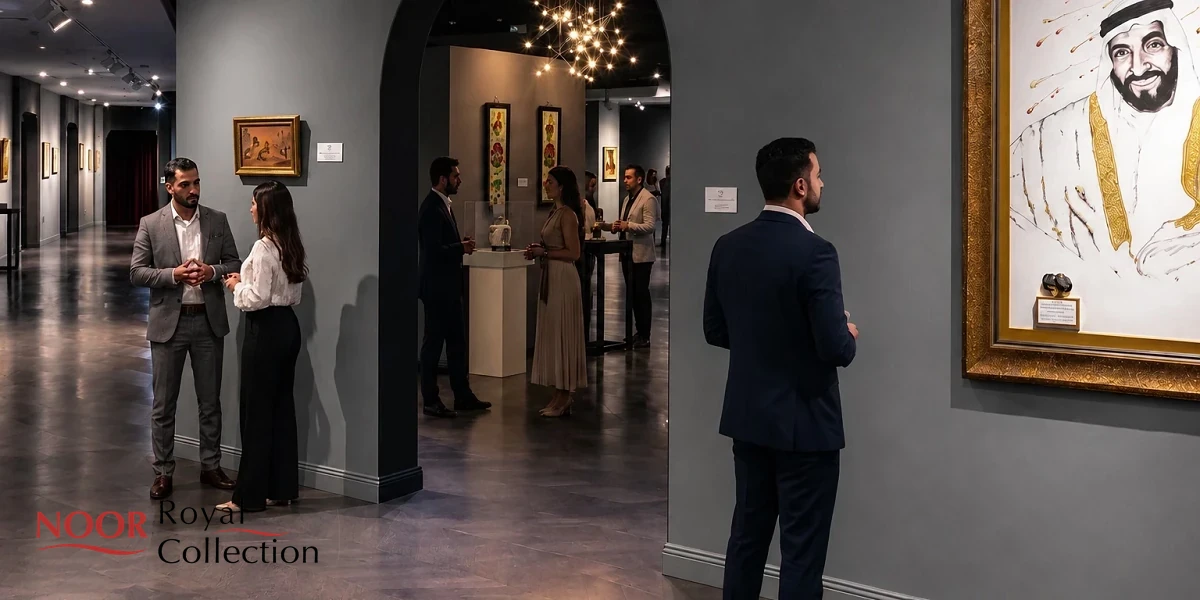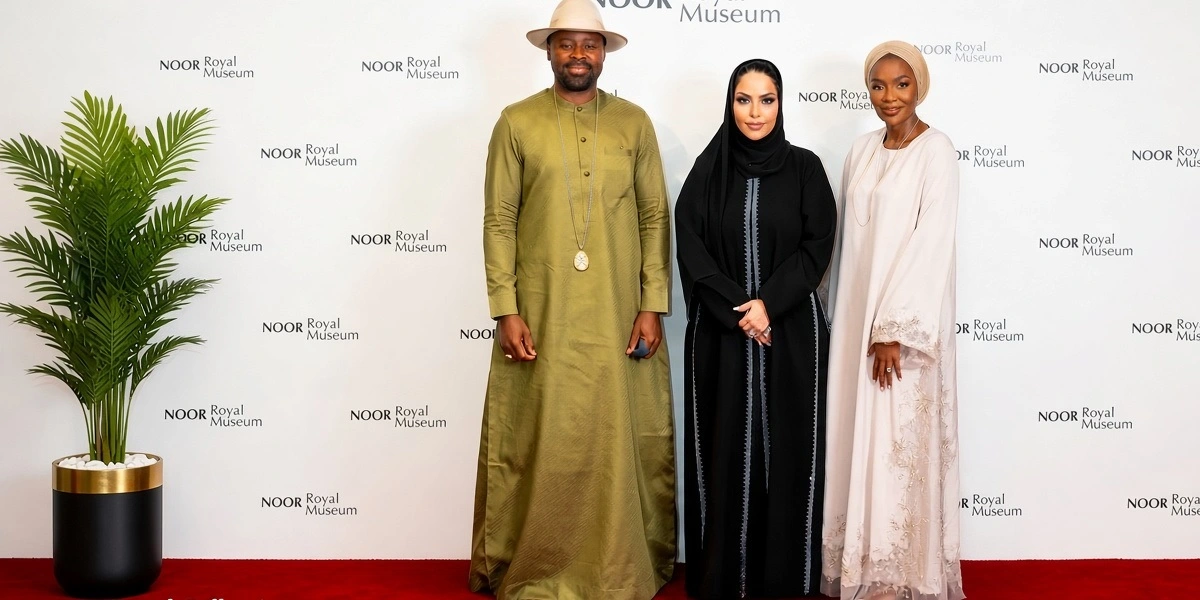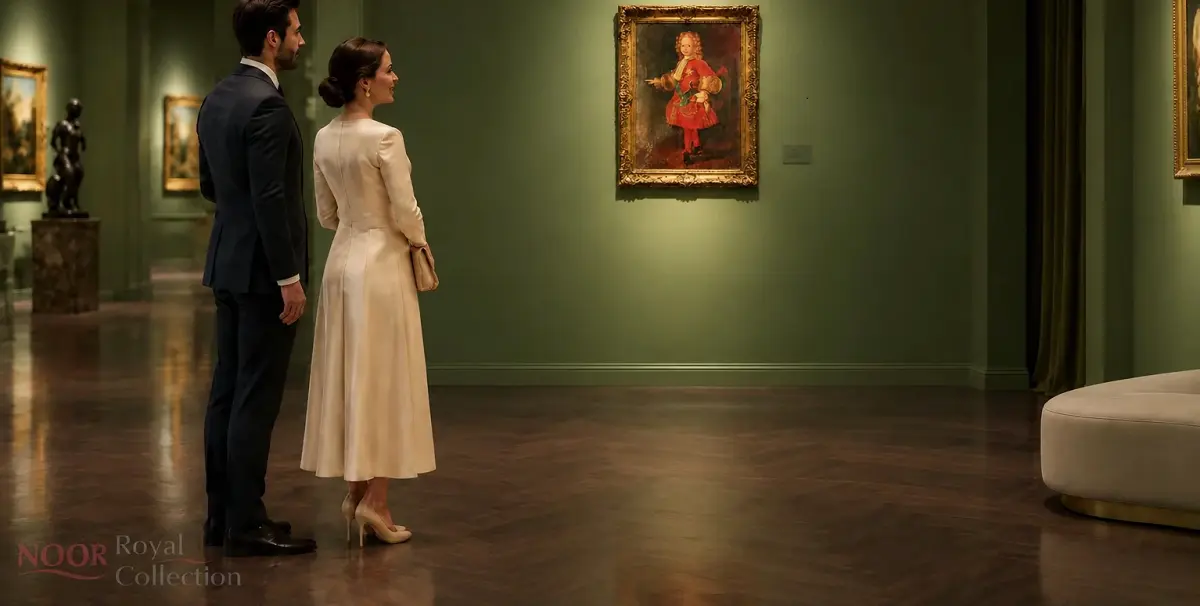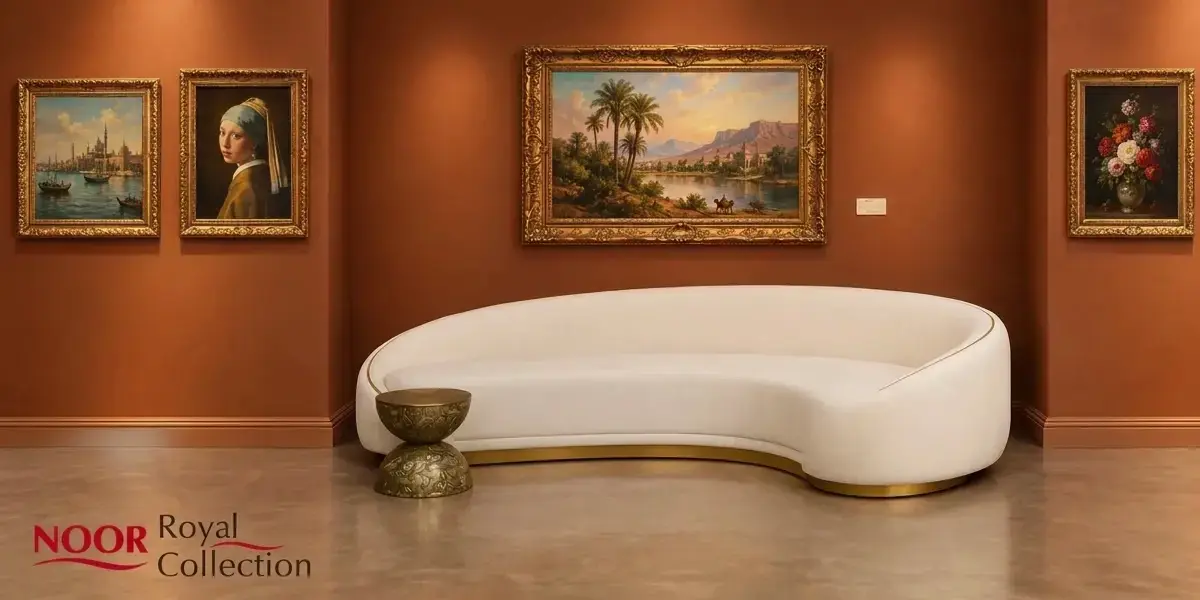
Contemporary art Dubai has become an increasingly important part of the city’s cultural identity. What was once a market that many international observers saw primarily through the lens of commerce and luxury has become a broader creative ecosystem, bringing together artists, galleries, collectors, museums, curators, cultural organizations, and art fairs. Today, exploring contemporary art in Dubai can mean discovering an emerging UAE artist, encountering experimental digital work, visiting a gallery exhibition in Al Quoz, attending an international art fair, or seeing works from private collections presented through major cultural programs.
For collectors, this diversity is exciting because Dubai offers more than one definition of contemporary art. The city’s galleries and institutions present painting, sculpture, photography, installation, performance, digital practices, and interdisciplinary work. Art Dubai’s current program, for example, spans contemporary, modern, and digital practices and connects regional artistic activity with international galleries and cultural institutions.
But where should a collector begin? If you are new to the Dubai art scene, the number of artists, exhibitions, galleries, and styles can initially feel overwhelming. The good news is that you don’t need to know everything before you start exploring. You need curiosity, an understanding of the local ecosystem, and a clear way of evaluating the art you encounter.
Understanding the Contemporary Art Dubai Landscape
Contemporary art is not simply a category defined by a particular visual style. It encompasses artists working in response to the cultural, political, technological, social, and personal realities of their time. That is why one contemporary artwork might be a traditional-looking painting while another could be an immersive installation, a photographic series, a sculpture, or a digitally produced work.
This variety is particularly visible in Dubai. The city’s art ecosystem connects artists and galleries from the UAE and the wider region with international practices. Alserkal Avenue describes itself as a community of contemporary art galleries, visual and performing arts organizations, designers, and artisanal spaces. In contrast, its gallery program includes practices from the UAE, the wider region, and international art communities.
For a collector, this means approaching contemporary art Dubai as a landscape rather than a single market. Your interests develop gradually as you visit exhibitions and encounter artists you had never heard of before.
Why Dubai Has Become a Regional Art Hub
Dubai’s position as an international city has helped connect different art communities. Collectors can encounter work from the Middle East, South Asia, Africa, Europe, and other regions without necessarily traveling between multiple countries.
Art Dubai plays an important role in that international conversation. The fair describes itself as a cultural platform rooted in the Middle East and connected to the Middle Eastern, Southeast Asian, and North African art ecosystems. Its 2027 program is structured across five sections: Art Dubai Galleries, Zamaniyyat, Bawwaba, Art Dubai Digital, and Art Dubai Extended.
That structure helps clarify where contemporary art is heading. It shows that the conversation is no longer limited to traditional gallery formats. Digital practices, immersive installations, emerging artists, and historical perspectives can coexist.
Exploring the Dubai Art Scene
The Dubai art scene is best experienced in person. Websites and social media can help you discover artists, but walking into a gallery offers something a screen cannot: scale, texture, atmosphere, and the chance to speak with people who understand the work.
Alserkal Avenue and Dubai’s Gallery Districts
Alserkal Avenue in Al Quoz is one of Dubai’s most recognizable destinations for contemporary art. The district grew from an industrial area into a cultural destination and now hosts galleries and creative organizations presenting exhibitions year-round. Its current program includes exhibitions featuring artists and practices connected to the UAE, India, Pakistan, Syria, Egypt, Chile, and other parts of the Global South.
One gallery might focus on conceptual practices, another on painting, and another on artists from a specific region or generation. Rather than trying to identify the “best” gallery, spend time understanding what each program represents.
Art Dubai and International Connections
Art Dubai provides another important window into the city’s cultural ecosystem. Its 2026 special edition brought together local, regional, and international galleries, with presentations spanning contemporary, modern, and digital practices. The program also included talks, commissions, performances, educational initiatives, and an institutional exhibition connected to Dubai Collection.
For collectors, an art fair is an opportunity to discover patterns. Which artists are receiving attention? What subjects are appearing repeatedly? How are artists working with technology? How are galleries presenting artists from the UAE and wider region alongside international names?
You don’t need to buy anything at your first art fair. Sometimes the most valuable thing you take home is a list of artists you want to research.
What Makes Contemporary Art Different?
Contemporary art often asks questions rather than providing straightforward answers. An artwork may explore identity, migration, memory, technology, climate, urbanization, history, or cultural change. Other works may be deeply personal and have little interest in making a direct social statement.
That openness is part of the appeal. You are not simply buying an attractive object; you may be acquiring an artwork that represents a particular idea, moment, artistic practice, or cultural conversation.
Painting, Sculpture, Photography, and Digital Art
Collectors entering the contemporary art Dubai market should resist limiting themselves to paintings. Painting remains an important medium, but Dubai’s contemporary ecosystem also includes sculpture, installation, photography, performance, and digital art.
Art Dubai Digital’s 2026 program demonstrated how far this expansion has gone, bringing together galleries, studios, collectives, and artists working with installation-led and multisensory digital practices.
This matters because the medium affects how you collect. A painting might require specific lighting and conservation considerations. A sculpture may need considerable floor space. A photographic work may have edition and printing specifications. Digital or immersive works can introduce questions around technology, display, software, and long-term access.
Understanding the medium helps you become a more informed collector.
Discovering UAE Contemporary Artists
The growth of UAE contemporary artists is an important part of the country’s evolving cultural landscape. Collectors interested in Dubai should not overlook artists working locally or artists whose practices engage directly with the UAE’s changing environment, history, identity, and society.
Discovering these artists can also give a collection a stronger connection to place. Rather than collecting only internationally famous names, you can explore how artists living and working in the UAE interpret their surroundings.
Emerging and Established Artistic Voices
A healthy art ecosystem needs both emerging and established artists. Established artists may have extensive exhibition histories and institutional recognition, while emerging artists can introduce new perspectives and experimental approaches.
Art Dubai’s Bawwaba section, for example, is dedicated to solo presentations of newly produced work by emerging to mid-career artists. This kind of platform can be valuable for collectors who enjoy discovery.
The important thing is not to assume that “emerging” automatically means “future investment” or that “established” automatically means “better.” Instead, look at the quality of the work, the artist’s practice, exhibition history, critical context, and your own response to the artwork.
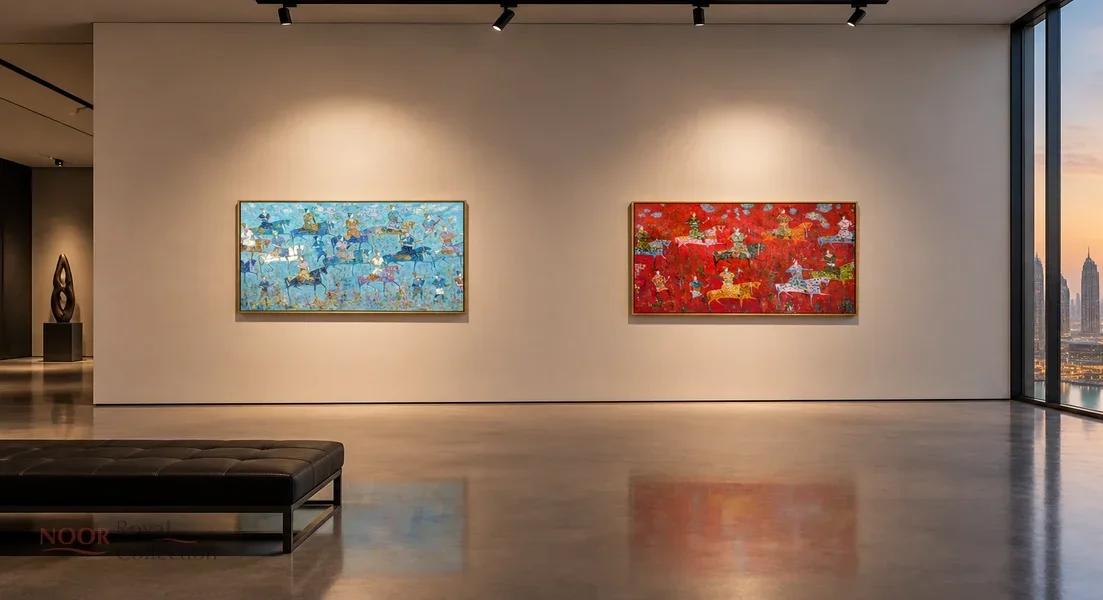
How to Choose Contemporary Art as a Collector
Buying contemporary art should begin with looking, not calculating. Stand in front of an artwork and give it time. What do you notice first? Does the work become more interesting the longer you look at it? Does the artist have something distinctive to say?
Then move from emotion to research.
Researching an Artist
Start by learning about the artist’s background and practice. Look at previous exhibitions, gallery representation, publications, institutional projects, and the development of their work over time.
You should also understand where the particular artwork fits within the artist’s career. Is it part of a significant series? Was it created for a particular exhibition? Does it represent a major shift in the artist’s practice?
These questions give you context without requiring you to become an expert overnight.
Evaluating an Artwork
When evaluating a work, consider its condition, materials, dimensions, date, provenance, documentation, and edition information where relevant. A gallery should be able to explain these details clearly.
You should also consider where the artwork will live. Contemporary art can completely change a room’s atmosphere, but the physical environment still matters. Think about wall dimensions, lighting, viewing distance, humidity, security, and installation requirements.
A work can be important and still be unsuitable for your space. That is not a criticism of the artwork; it simply means collecting requires both aesthetic and practical judgment.
Visiting a Contemporary Art Gallery Dubai
A visit to a contemporary art gallery in Dubai should feel like an opportunity to learn, not an examination you have to pass.
Ask questions. What is the artist exploring? Why was this work selected? Is it part of a larger series? How has the artist’s practice developed? What other exhibitions or institutions have presented the work?
A professional gallery should welcome serious questions. You should also feel comfortable saying that you need time to think. You do not have to buy an artwork simply because you expressed interest in it.
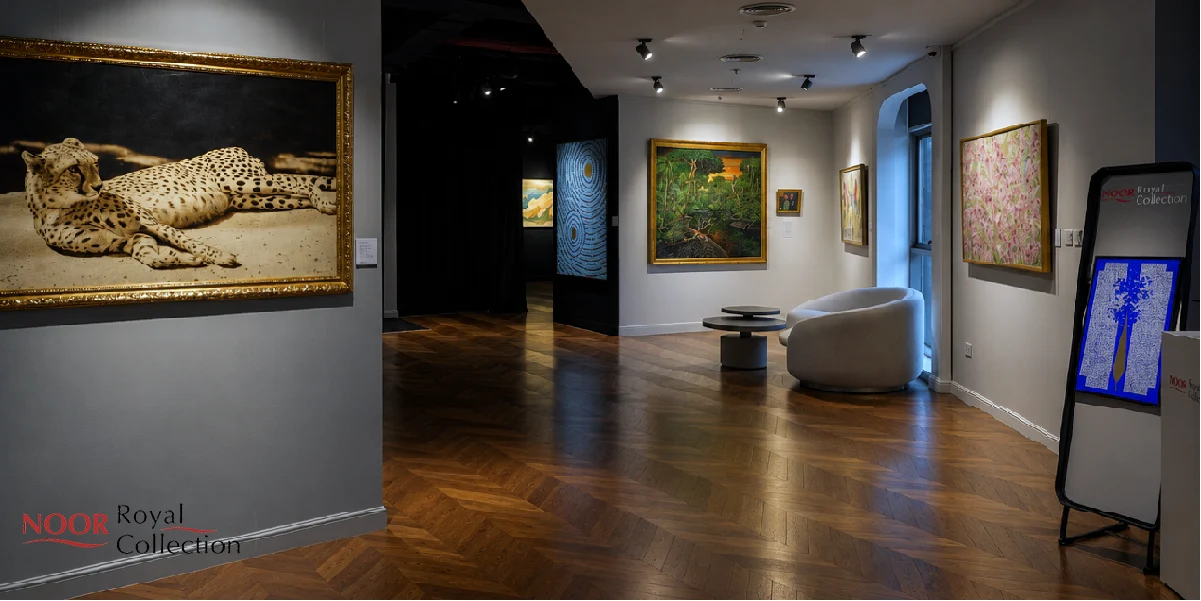
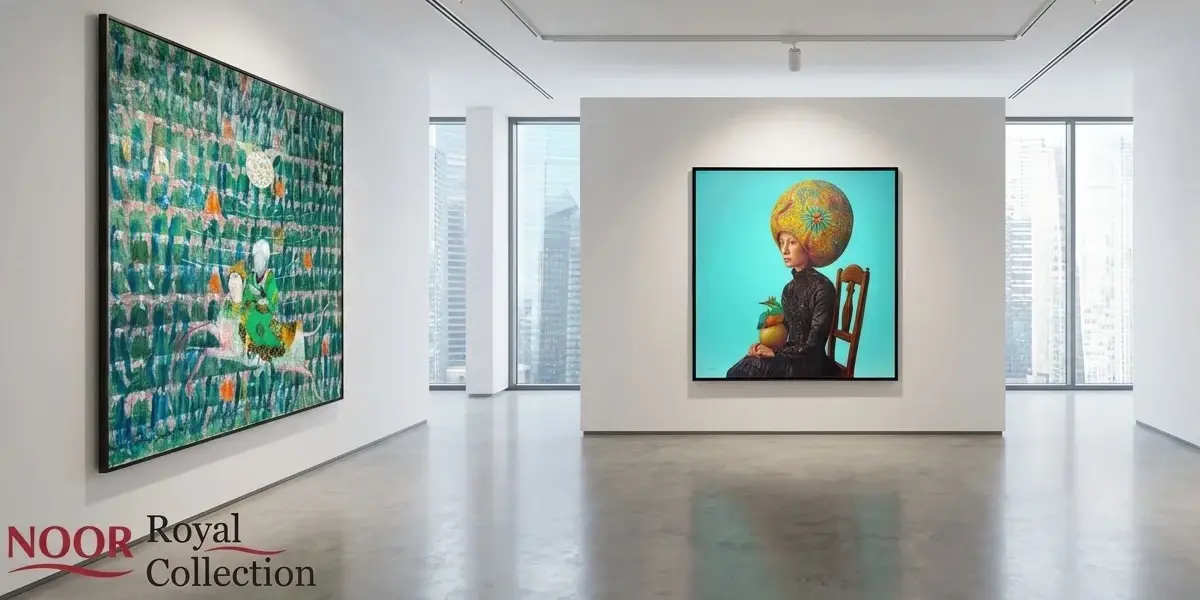
For collectors who want a broader range of practices in one place, Noor Royal Collection presents painting, sculpture, installations, photography, digital art, and performance, alongside art advisory, collection-building, and educational initiatives.
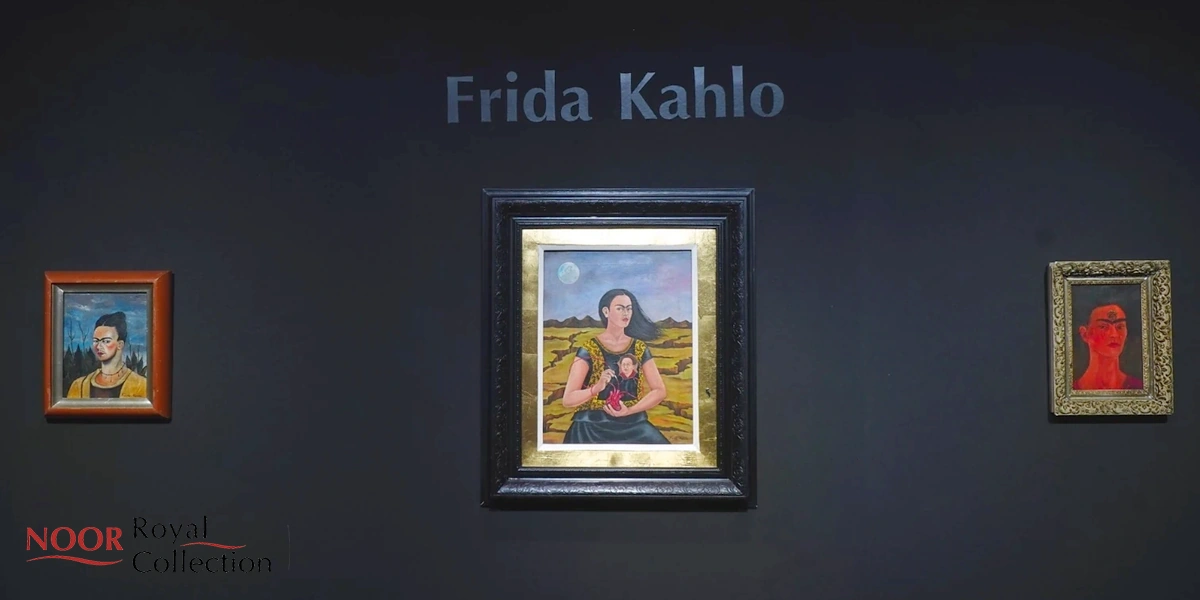
Its program also brings together established masters and emerging voices, creating connections across cultures, mediums, and generations.
The Role of Museums and Cultural Institutions
Museums can be among the best places to develop your eye as a collector. Why? Because a museum gives you context.
When you see how curators place an artwork within an exhibition, you begin to understand relationships between artists, movements, materials, and historical periods. You also start to notice what makes a particular artwork distinctive.
The museum experience can make gallery visits more meaningful. Instead of asking only whether you like a painting, you may begin asking what the artist is doing differently, what traditions they are responding to, and how their work fits into a larger cultural conversation.
Dubai’s art ecosystem increasingly connects private collecting with institutional programming. Art Dubai’s program, for example, includes an annual institutional exhibition curated from Dubai Collection, presenting works from private collections.
Why Provenance and Documentation Matter
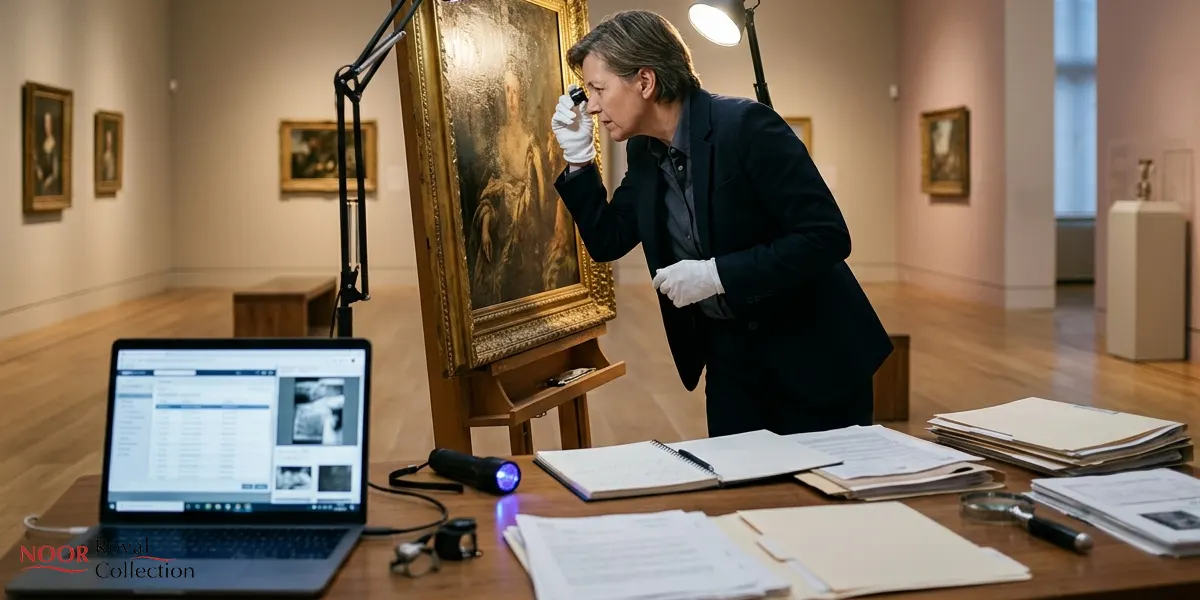
Collectors should never overlook documentation. When purchasing contemporary art, ask about the artwork’s authenticity, provenance, creation date, materials, dimensions, and condition.
For editioned works, ask about the total edition size and the specific number of the piece. For unique works, ensure the purchase documentation clearly identifies the artwork.
Keep your invoice and supporting records securely. These documents can become important for insurance, valuation, future resale, estate planning, or simply maintaining a professional record of your collection.
The larger the purchase, the more important due diligence becomes.
Building a Contemporary Art Collection
A collection does not need to begin with ten artworks. One carefully chosen piece can be enough.
The most interesting collections often develop organically. A collector may begin with a painting and later discover photography, sculpture, digital art, or artists from another cultural background. Over time, connections appear.
You might become interested in artists exploring identity. You might gravitate toward abstraction. You might find yourself collecting works that respond to the Gulf’s history and changing landscape.
Your collection doesn’t need to follow someone else’s definition of sophistication. Your collection can be personal.
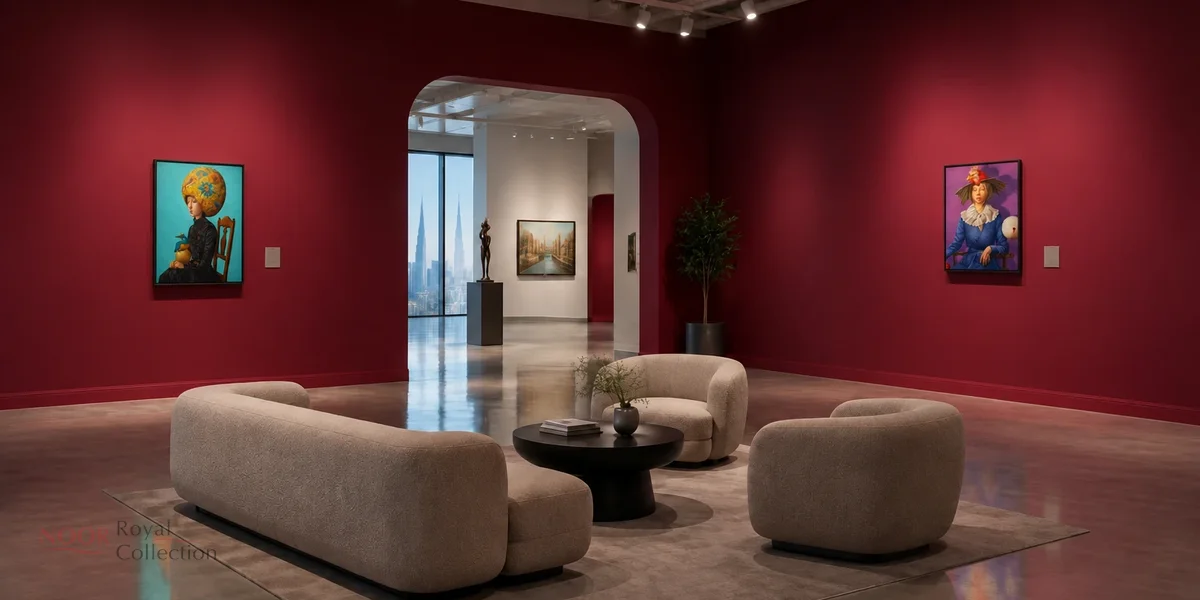
Exploring Contemporary Art at Noor Royal Collection
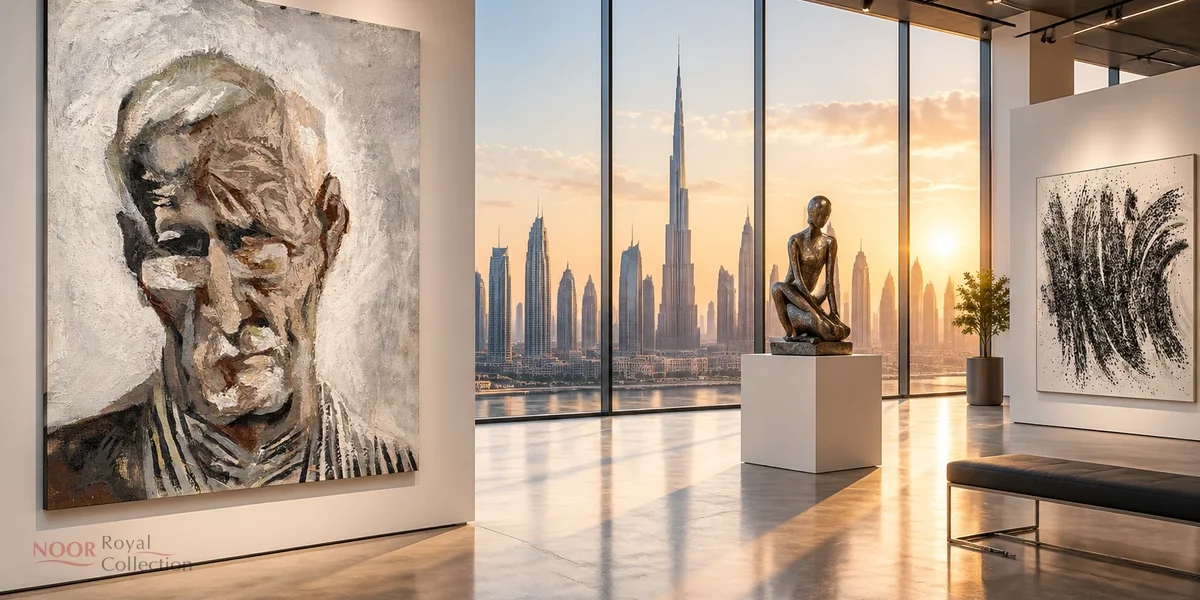
For collectors looking to explore contemporary art in Dubai, Noor Royal Collection offers a curated environment where contemporary and established artistic practices can be explored together.
The collection’s artistic spectrum includes painting, sculpture, installations, photography, digital art, and performance, while its collector services include art advisory and collection building. This makes it a useful starting point for collectors who are still developing their interests or want specialist guidance when building a collection.
Noor Royal Collection is located at No. 235, Jumeirah 2, Dubai, UAE. The gallery’s contact page also welcomes inquiries from collectors and curators regarding exhibitions, acquisitions, and special commissions.
Whether you are discovering contemporary art for the first time or already have an established collection, the most productive approach is to look widely, ask questions, and give yourself time to develop your own perspective.
Ready to discover contemporary art in Dubai?
Explore Contemporary Art at Noor Royal Collection
Conclusion
Dubai’s contemporary art landscape is broad, diverse, and continually evolving. From the galleries of Alserkal Avenue to international events such as Art Dubai, from UAE-based artists to global contemporary practices, collectors have access to an unusually wide range of artistic perspectives.
The best way to understand this scene is to experience it directly. Visit galleries, spend time in museums, attend exhibitions, follow artists, speak with curators, and look beyond the names you already know.
Most importantly, collect with curiosity. Contemporary art is not simply about filling walls. It is about discovering ideas, perspectives, cultures, and creative voices that can remain part of your life long after an exhibition has closed.
If you are ready to begin exploring, visit Noor Royal Collection and discover a selection that brings together contemporary practices, established masters, and different artistic mediums under one roof.
FAQs About Contemporary Art Dubai
What is contemporary art in Dubai?
Contemporary art in Dubai includes artistic practices created by living or recently active artists across mediums such as painting, sculpture, photography, installation, performance, and digital art. The city’s ecosystem connects UAE-based and regional artists with international artistic practices.
Where can I discover contemporary art in Dubai?
Alserkal Avenue in Al Quoz is one of the city’s major contemporary art destinations, with galleries and creative organizations presenting exhibitions year-round. Art Dubai is another important platform for discovering regional and international galleries and artists.
Who are UAE contemporary artists?
UAE contemporary artists work across a wide range of mediums and subjects, often engaging with questions of identity, culture, history, place, technology, and social change. Collectors can discover artists through galleries, exhibitions, art fairs, and cultural programs across the UAE.
Is contemporary art a good starting point for a new collector?
Contemporary art can be an accessible starting point because it encompasses many different styles, mediums, and price levels. New collectors can begin by visiting exhibitions and learning about artists before deciding what type of work resonates with them.
Where can I explore contemporary art at Noor Royal Collection?
Noor Royal Collection is located in Jumeirah 2, Dubai, and offers a range of artistic mediums, along with collection-building and art advisory services. You can explore the collection online or contact Noor Royal Collection regarding exhibitions and acquisitions.