Starting an art collection can seem like something reserved for wealthy investors, seasoned dealers, and people who can tell a Picasso from a Picasso-inspired print at twenty paces. It doesn’t have to be. If you’re wondering how to start an art collection, the first step isn’t writing a large cheque; it’s learning to look at art with curiosity, patience, and a little discipline. Dubai is an especially interesting place for a novice art collector because its cultural landscape brings together regional artists, international galleries, private collections, exhibitions, art fairs, museums, and increasingly sophisticated collector services. The city also offers a useful mix of accessible entry points and high-end opportunities, meaning you can begin small and gradually become more knowledgeable.
A successful Dubai art collection should reflect more than price tags. It can express your interests, memories, cultural connections, design preferences, or fascination with a particular artist or movement. Some collectors focus on contemporary Middle Eastern art; others build collections around photography, sculpture, abstract painting, works on paper, calligraphy, or artists from particular countries. There isn’t one correct formula. Your collection should evolve as your eye develops.
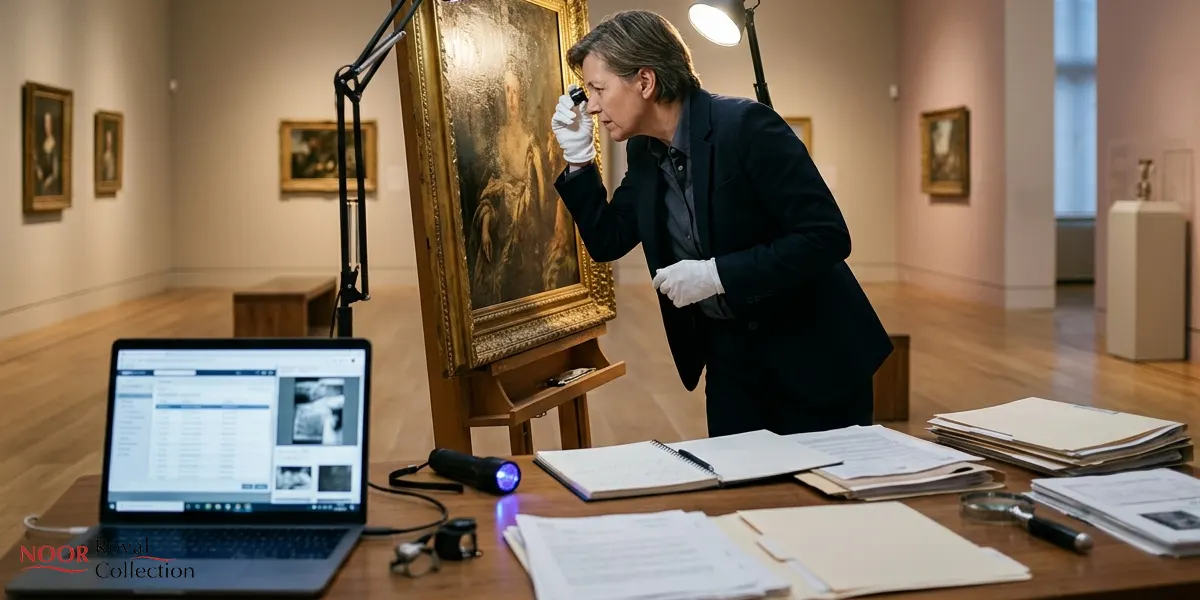
The commercial side matters, too. Buying art in the UAE involves more than choosing something beautiful. You should understand the artist, seller, provenance, condition, edition information, documentation, VAT where applicable, shipping, insurance, framing, and future care. For a significant purchase, professional advice can be extremely useful because an experienced art advisor can help you separate emotional excitement from practical due diligence.
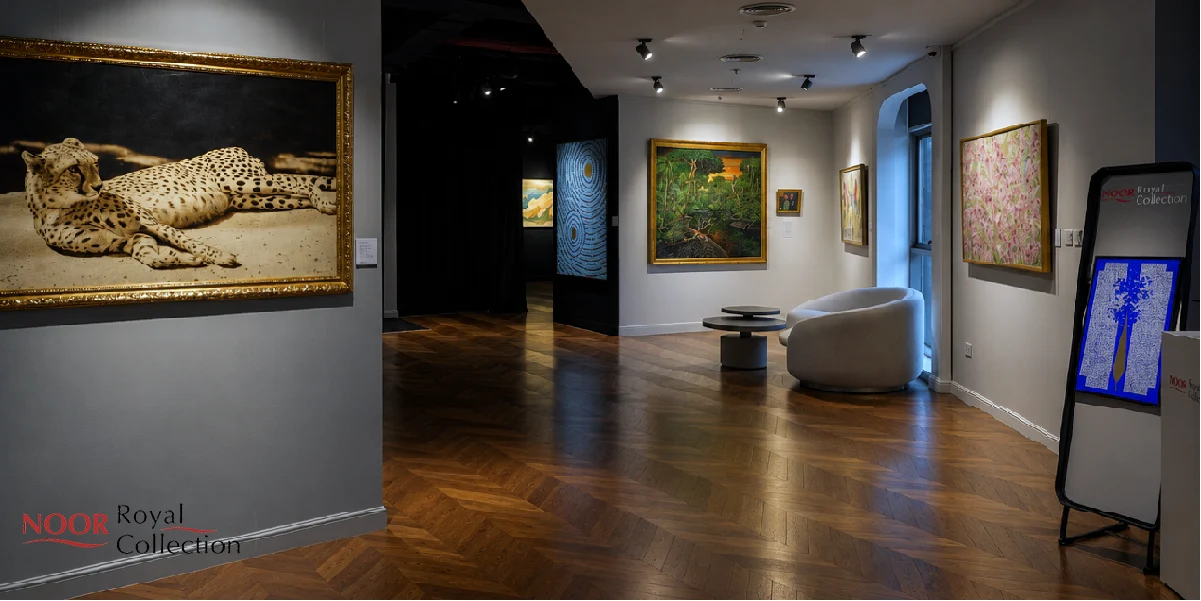
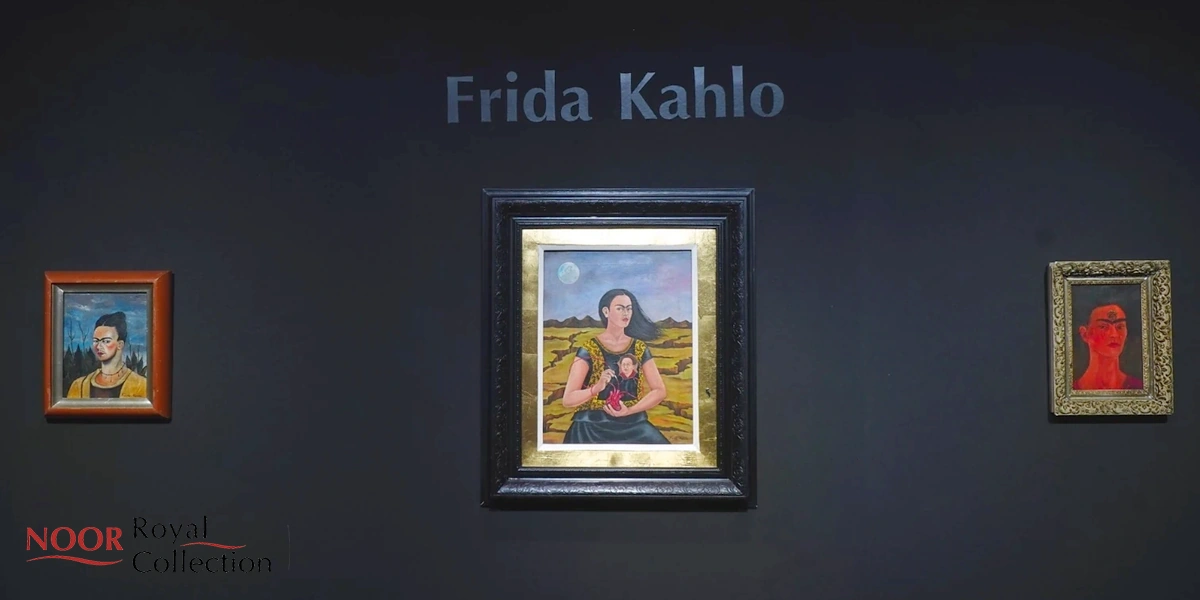
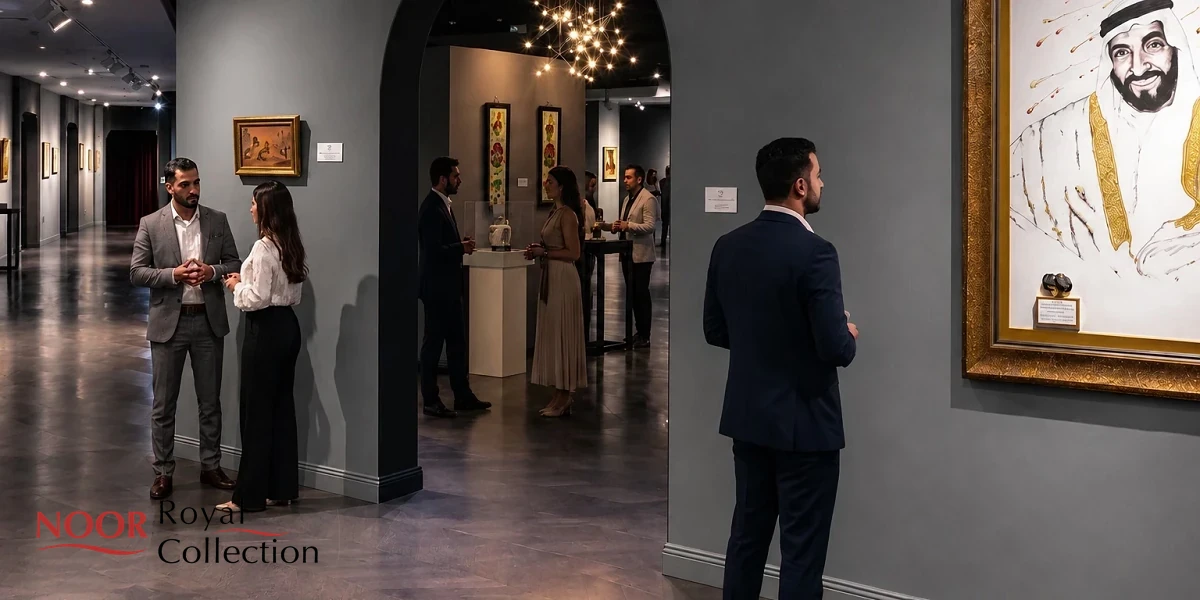
Dubai’s art ecosystem gives beginners plenty of places to start. Alserkal Avenue remains one of the city’s major creative districts, and its September 2026 program featured 19 exhibitions across 16 galleries and art spaces, showing the depth and variety of the current scene. Noor Royal Collection in the UAE also offers collector-focused services, exhibitions, private previews, and personalized art advisory through its wider collector program.
So, how do you go from admiring art to actually building a collection? Take it one step at a time.
Why Dubai Is an Exciting Place to Begin Collecting Art
Dubai’s art market has matured considerably, making the city an attractive place for someone learning to start an art collection. Instead of traveling from city to city to see different artists and galleries, a collector in Dubai can explore several distinct cultural environments within the same metropolitan area. Alserkal Avenue in Al Quoz is one of the most obvious starting points, with galleries, cultural organizations, studios, and creative businesses clustered within a former industrial setting. Current 2026 coverage describes the district as a major concentration of contemporary art spaces, with exhibitions spanning Middle Eastern, regional, and international practices.
That concentration creates a valuable learning opportunity. A novice collector can spend a Saturday walking through exhibitions without buying anything. In fact, that’s exactly what you should do in the beginning. Walk into galleries, ask questions, read exhibition texts, compare artists, and pay attention to the works that make you stop. Art collecting is partly about knowledge, but it’s also about developing visual instincts. The more original artworks you see in person, the easier it becomes to distinguish a temporary attraction from something that genuinely resonates with you.
Dubai’s Growing Art Ecosystem
One reason Dubai works well for new collectors is its combination of commercial and cultural activity. Galleries introduce artists and facilitate acquisitions, while foundations, museums, cultural districts, art fairs, and public programs provide context. That context matters because a gallery price alone tells you very little about an artist’s broader career.
For example, when researching an artist, you might look at where they’ve exhibited, which galleries represent them, whether museums or institutions have acquired their work, whether they’ve participated in residencies, and how their practice has developed over time. None of those factors guarantees future financial performance. Still, together they help you understand the artist’s position within the art world.
Dubai also provides opportunities to explore artists connected to the wider Middle East, South Asia, Africa, Europe, and other regions. This can make a Dubai collection culturally diverse from the outset. Rather than copying another collector’s taste, you can build a collection that reflects your own geographic and intellectual interests.
Art Fairs, Galleries, and Cultural Districts
Art fairs are particularly useful for market education because they compress a huge amount of information into a relatively short period. Art Dubai, for instance, has become an important international platform for artists, galleries, collectors, and cultural institutions. Its 2027 edition is scheduled for April 9–11, 2027, following its 2026 special edition.
For a beginner, however, the sheer volume of an art fair can be overwhelming. Don’t arrive thinking you need to buy something. Instead, use the fair as a research laboratory. Take notes about artists you like, record gallery names, compare prices where information is available, and ask questions about materials, editions, and provenance. If one artist keeps appearing in your notes, that’s a signal worth investigating after the fair.
World Art Dubai can provide another entry point for collectors who want a broad range of accessible works. The 2026 edition is scheduled for November 19–22 at Dubai World Trade Center, according to the event’s current information. Its buying-oriented format can make it particularly useful for people who want to see many artists and price points in one environment.
The trick is to avoid confusing abundance with urgency. You don’t need to buy because the exhibition ends tomorrow. Good collecting decisions usually survive a night of sleep.
Step 1: Define What You Want Your Collection to Be
Before you spend money, decide what you want your collection to communicate. You don’t need a ten-page collecting strategy. A single sentence is enough to begin. You might say, “I want to collect contemporary artists connected to the Middle East,” or “I want my collection to focus on abstract works that explore architecture and memory.” That simple statement becomes a filter.
A collecting focus is especially useful when you’re starting because the art world can otherwise feel endless. Every week brings another artist, exhibition, Instagram post, fair, auction, or gallery recommendation. Without a framework, you can end up buying disconnected pieces simply because each one looks attractive on its own.
A theme doesn’t mean every artwork must match perfectly. Think of it as a book’s spine rather than a cage. A collection can contain different media and styles while still having a recognizable intellectual or emotional thread.
Choose a Collecting Theme
Start by paying attention to your natural preferences. What do you save online? Which exhibitions do you remember? Which paintings do you still think about days after seeing them? What kind of art would you enjoy looking at every morning?
Your answers can reveal more than a generic “I like modern art” statement. Maybe you consistently prefer monochrome works. Perhaps you’re drawn to artists who explore identity or migration. Maybe you love bold color but dislike photorealism. Or perhaps your strongest connection is with works by artists from a particular cultural background.
Keep a simple digital notebook of artists and artworks that interest you. Include the date you discovered them and a sentence explaining what caught your attention. After several months, patterns will appear.
This exercise is particularly valuable for a novice art collector because it separates personal taste from market noise. Someone else may tell you that a certain artist is important, but your notebook shows what you actually respond to.
Decide Between Emerging and Established Artists
One of the earliest decisions you’ll encounter is whether to focus on emerging artists, established artists, or a combination of both.
Emerging artists can offer accessible entry points and let collectors engage with developing careers. Established artists may have longer exhibition histories, stronger institutional recognition, and more documented market activity. Neither category automatically represents a better purchase.
The key is to understand the difference between collecting for enjoyment and speculating on future prices. If you buy an emerging artist because you love the work, understand the practice, and can afford the price, you’re making a collecting decision. If you buy solely because someone promises that the artist will become famous next year, you’re making a prediction.
Predictions are inherently uncertain.
A balanced collection may contain artists at different stages of their careers. What matters is understanding why each work belongs in your collection.
Step 2: Set a Realistic Art-Collecting Budget
Your first art budget should be comfortable, not impressive. No official amount is required to become a collector, and starting small can improve your decision-making. If your first purchase is modest, you can learn about the transaction process, documentation, framing, shipping, and insurance without putting excessive financial pressure on yourself.
Think about your total acquisition cost, not just the gallery price. Depending on the transaction, you may need to account for VAT, international shipping, customs-related costs, framing, installation, insurance, conservation, and currency exchange.
This is where many beginners get caught out. A piece advertised for a particular price isn’t necessarily the final amount you’ll spend.
Build an All-In Budget
A simple planning framework can look like this:
|
Cost category |
Questions to ask |
|
Artwork |
What is the final purchase price? |
|
VAT |
Is VAT applicable, and is it already included? |
|
Shipping |
Is delivery local or international? |
|
Customs |
Are there import procedures or duties to consider? |
|
Framing |
Does the work require specialist or archival framing? |
|
Installation |
Does it need professional installation? |
|
Insurance |
Is transit and display coverage required? |
|
Conservation |
Does the material need special care? |
|
Storage |
Will the work need specialist storage? |
| Documentation |
Are certificates, reports, and invoices supplied? |
The Ministry of Finance confirms that VAT was introduced at this standard rate in 2018, while Federal Tax Authority guidance explains that imports can be included when determining taxable supplies and that VAT may apply to imported goods.
The exact treatment of an artwork depends on the transaction, buyer status, seller, and import circumstances. Don’t rely on an old article or a friend’s assumption. The FTA’s VAT legislation page was updated in September 2026 and lists recent regulations and decisions, so check significant transactions against current official guidance.
If you’re collecting personally, keep your art budget separate from money needed for living expenses, emergencies, or other financial commitments. Art can be valuable, but it isn’t the same as cash. Selling quickly isn’t always easy.
Step 3: Learn Where to Buy Art in Dubai
Once you’ve established your interests and budget, start exploring the market in person. This is one of the most enjoyable parts of learning how to start an art collection.
Visit galleries even when you don’t intend to buy. Tell gallery staff that you’re new to collecting. Ask them about the artist, the exhibition, available works, and price ranges. You don’t need to pretend that you’re an experienced collector. In fact, being honest about your level of knowledge often leads to better conversations.
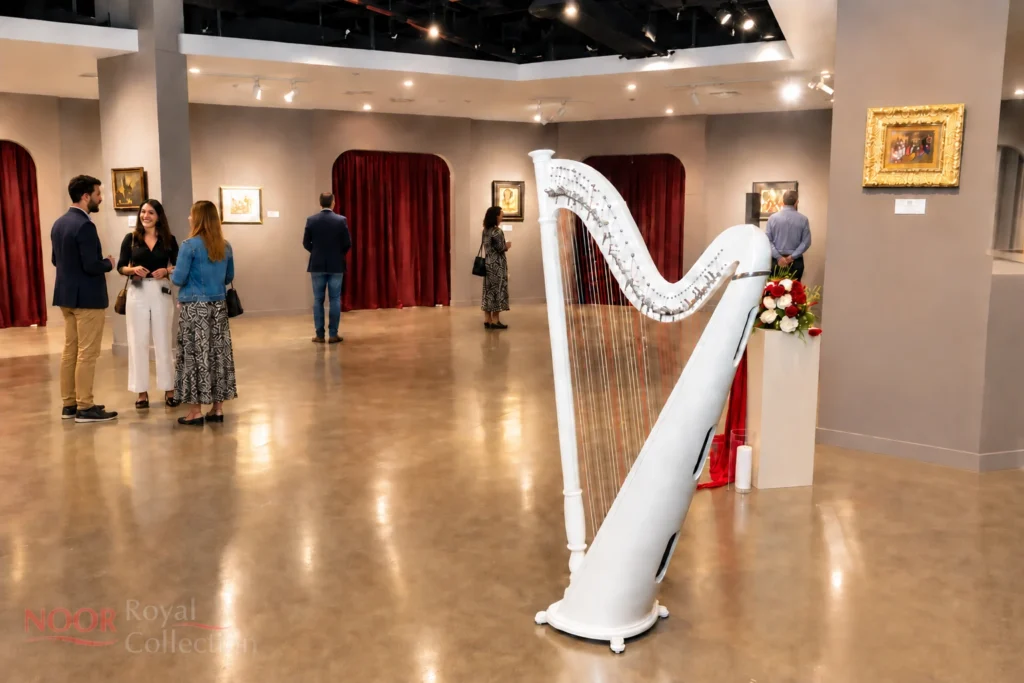
Don’t try to see everything in one visit. Pick a few spaces and give yourself enough time actually to look. Six rushed galleries aren’t necessarily more useful than three carefully considered visits.
At Noor Royal Museum, we unite emerging voices and established masters, creating a dialogue across cultures, mediums, and generations. Our mission is to offer an inspiring space where art bridges vision and reality.
When you find an artist you like, ask:
- What is the artist’s background?
- What is the current exhibition about?
- Where else has the artist exhibited?
- Is the work unique or part of an edition?
- What documentation comes with the artwork?
- Is the artist represented by the gallery?
- Are there works at different price points?
These questions help you learn how galleries communicate an artist’s practice.
Explore Art Fairs and Auctions
Art fairs are ideal for comparison. You can see multiple artists, galleries, mediums, and price levels within a few hours. Make notes instead of relying on memory.
Auctions require additional care. The advertised estimate isn’t necessarily your final cost, because buyer’s premiums and other charges can apply. Understand condition reports, provenance, auction terms, payment deadlines, and collection arrangements before you bid.
For a beginner, there is absolutely nothing wrong with observing several auctions before participating. You can learn a surprising amount by simply watching how works are presented and sold.
Step 4: Research Artists Before You Buy.
Finding a beautiful artwork is the beginning of the process, not the end.
Before making a purchase, research the artist independently. Look at their official biography, gallery representation, exhibition history, interviews, publications, institutional activity, and broader practice. Search beyond the exact artwork you’re considering.
You want to understand the artist as a creative practitioner rather than simply as a product.
For example, imagine you find a painting that you love. Before purchasing, you discover it belongs to a broader series on a subject you’re deeply interested in. Suddenly the artwork has context. You understand why it was created, where it sits in the artist’s practice, and why the gallery considers it significant.
That knowledge can make the collecting experience much richer.
Understand Provenance and Authenticity
Provenance refers to the documented history of an artwork’s ownership or origin. For a newly created contemporary artwork purchased directly through the artist’s representative gallery, provenance is often straightforward. Older works and secondary-market purchases can require considerably more investigation.
Depending on the work, useful documents can include a certificate of authenticity, invoice, provenance records, exhibition history, condition report, edition documentation, and shipping records.
Before buying, check that the paperwork accurately describes the artwork.
Pay attention to:
Artist’s name.
Artwork title.
Creation date.
Medium.
Dimensions.
Edition number, if applicable.
Certificate details.
Seller’s identity.
Purchase price and currency.
Condition information.
Keep everything.
A collector’s paperwork can become just as important as the physical artwork when the piece is insured, transported, resold, loaned, or passed to another owner.
Step 5: Evaluate an Artwork Like a Collector
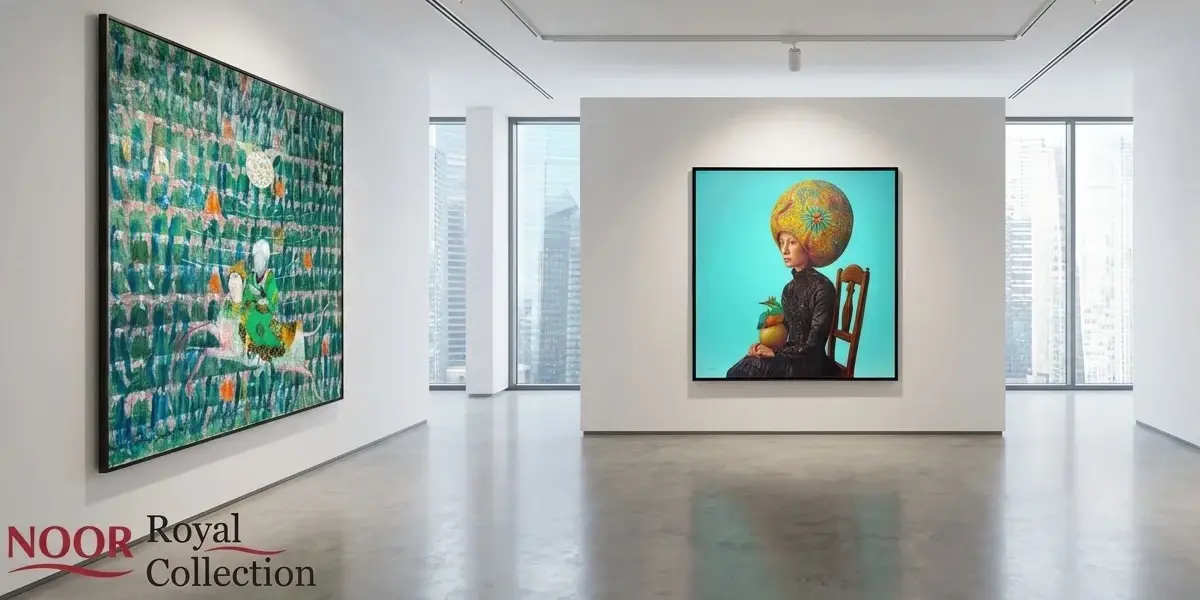
One of the best habits you can develop is learning to slow down. Gallery environments can make everything look perfect. Beautiful lighting, white walls, and careful placement are designed to let you experience the work at its best. That’s useful, but your job as a collector is to look beyond the presentation.
Ask yourself whether the artwork works visually in your intended space. Think about its scale, colors, texture, materials, and viewing distance. Consider whether the work requires special lighting or environmental conditions.
Then look at condition.
An artwork that appears flawless may have been restored, reframed, transported extensively, or exposed to conditions that affect its long-term preservation. For higher-value works, a professional condition report can be worthwhile.
Condition, Edition, and Materials
The medium changes the questions you need to ask.
For a painting, you may want to understand the support, pigments, varnish, age, previous restoration, and framing.
For photography, ask about the printing process, edition size, paper, mounting, and certificate.
For sculpture, ask about materials, fabrication, edition numbers, outdoor suitability, installation requirements, and maintenance.
For digital or time-based art, ask how the work is displayed, what equipment is required, and how the work’s authenticity and future presentation are documented.
For works on paper, archival framing can be particularly important.
Don’t assume that a larger artwork is more valuable or that a unique work is automatically a better choice than an edition. These are simply characteristics. Your task is to understand them.
Step 6: Understand Dubai and UAE Buying Costs
The financial side of buying art in the UAE deserves attention because the final cost can differ from the headline price.
VAT is currently standard in the UAE, subject to the rules and exceptions in the VAT legislation. The Federal Tax Authority also confirms that VAT can apply to imports. For a non-VAT-registered person importing goods, the FTA states that VAT may need to be paid before the goods are released.
VAT and Imported Artworks
If you’re purchasing from an international gallery, ask for a complete landed-cost estimate before committing.
For example, your actual acquisition cost could potentially involve:
Artwork price + shipping + insurance + applicable taxes/VAT + customs-related charges + framing + installation.
The exact calculation depends on the transaction, so treat this as a planning framework rather than a tax calculation.
If you’re purchasing art through a company, buying and selling art as a business, importing regularly, or dealing with significant values, professional tax advice is sensible.
The important lesson is simple: understand your full cost before you sign the purchase agreement.
Step 7: Negotiate and Complete the Purchase Properly
Art isn’t always sold on a “take it or leave it” basis, but not every artwork is negotiable. Pricing can depend on the artist, gallery, edition, demand, exhibition, and relationship with the collector.
Rather than asking only for the lowest possible price, ask informed questions.
You might ask whether VAT is included, whether framing is included, whether delivery is included, whether the work is available immediately, or whether the gallery can suggest related works within your budget.
If you’re considering several works, explain your budget honestly. A good gallery may recommend alternatives rather than simply trying to close the most expensive sale.
What Your Invoice and Certificate Should Include
Your paperwork should clearly identify the artwork and transaction.
At minimum, make sure you have accurate details for the artist, title, medium, dimensions, date, purchase price, seller, and edition where applicable.
For a certificate of authenticity, check that the details correspond to the artwork you actually receive.
For expensive purchases, consider independent legal or advisory review. Spending a little on professional due diligence can be sensible when the artwork itself represents a substantial financial commitment.
This is also where an art advisor can become particularly useful. An advisor can help you compare works, understand market context, review documentation, coordinate specialists, and keep the acquisition aligned with your overall collecting goals.
Step 8: Protect and Display Your Collection
Your responsibilities don’t end when the artwork reaches your home.
Dubai’s climate makes environmental planning particularly important for certain materials. Heat, sunlight, dust, humidity, air-conditioning cycles, and transportation can all affect artworks depending on their construction and medium.
That doesn’t mean you need to turn your home into a museum. It simply means you should understand what each piece needs.
Storage, Framing, Lighting, and Insurance
Good framing is part of conservation, not merely decoration. For works on paper and other sensitive materials, discuss archival mounting and suitable glazing with an experienced framer.
Lighting should also be considered. Strong direct sunlight can cause fading in susceptible materials. Even if a gallery displays a work under carefully controlled lighting, your home may have very different conditions.
Insurance is another area where assumptions can be costly. Ask your insurer whether artwork is covered and whether you need individual valuation, specialist coverage, transit coverage, or separate scheduling.
Create a digital archive containing:
High-resolution photographs.
Purchase invoices.
Certificates.
Condition reports.
Provenance documents.
Valuation documents.
Insurance information.
Framing details.
Conservation records.
Installation photographs.
Think of this as the artwork’s passport. If it ever travels, gets insured, loaned, sold, or inherited, those records can make the process much easier.
Step 9: Build Your Collection Over Time
One of the most useful lessons for anyone learning how to start an art collection is that there is no prize for collecting the fastest.
A strong collection may take years to build.
Your first purchase teaches you something. Your second purchase teaches you something different. After ten exhibitions, you’ll notice things you never noticed at the beginning. After speaking with artists and galleries, you’ll become more comfortable asking about technique, materials, edition sizes, and provenance.
This gradual learning process is one of the pleasures of collecting.
A collection also becomes more interesting when you allow it to evolve naturally. You may begin with contemporary painting and eventually discover sculpture. You may start with regional artists and later develop an interest in international artists who address similar themes. You may discover that you prefer smaller works because they create a more intimate relationship with your home.
That’s perfectly normal.
How an Art Advisor Can Help a Novice Art Collector
For a novice art collector, professional guidance can shorten the learning curve.
An art advisor can help you clarify your collecting objectives, identify artists and works that fit your interests, compare opportunities, understand market context, review documentation, and plan acquisitions around your available budget.
This doesn’t mean giving up your personal taste—quite the opposite. The best advisory relationship should help you understand your own preferences more clearly.
A good advisor should ask questions such as:
What kinds of art do you already enjoy?
What is your approximate budget?
Are you buying for a home, office, or investment collection?
Are you interested in regional artists?
Do you prefer emerging or established artists?
How much wall or storage space do you have?
Are you interested in one-off works or editions?
How important is potential resale?
Are there particular artists or movements you want to explore?
The answers create a collecting framework.
For collectors in Dubai, Noor Royal Collection provides a useful point of contact for exploring artworks and collector services. Its current website describes private viewings, collector events, personalized art services, exhibitions, and acquisition support. At the same time, its membership program includes personalized art advisory at its Prestige level.
The gallery is located at No. 235, Jumeirah 2, Dubai, and its current contact page invites collectors to enquire about exhibitions, acquisitions, and special commissions.
For a new collector who wants to turn online research into an actual conversation, visiting a gallery and discussing your interests can be a practical next step.
Common Beginner Mistakes to Avoid
The first mistake is buying because somebody says an artist is “the next big thing.” The art market offers no guarantees.
The second is spending your entire budget on the first artwork you love. Give yourself time to compare.
The third is ignoring documentation. Even if you adore a piece, you should still understand what you’re purchasing and what records accompany it.
The fourth is failing to calculate the full cost. Shipping, framing, insurance, VAT, installation, and conservation can all affect your real expenditure.
The fifth is buying something that doesn’t work in your space—measure before you buy.
The sixth is treating social media popularity as equivalent to artistic significance. Instagram visibility can be useful for discovery, but it isn’t a substitute for researching an artist’s career.
The seventh is pretending to understand something you don’t. Ask questions. Gallery professionals expect questions, and artists often enjoy discussing their work with genuinely curious collectors.
The eighth is thinking your first artwork needs to be a masterpiece. It doesn’t.
Your first piece should teach you something.
Six Questions Beginners Commonly Ask About Collecting Art in Dubai
- How much money do I need to start an art collection?
There is no universal minimum. A beginner can explore smaller works, editions, photography, works on paper, and emerging artists before moving toward higher-value acquisitions.
The key is to set a budget that doesn’t interfere with your broader financial responsibilities. Your first objective should be learning how the market works.
- Where should I begin when building a Dubai art collection?
Start by visiting galleries and exhibitions rather than shopping online immediately. Current 2026 programming demonstrates the breadth of exhibitions available in the UAE.
You can also explore DIFC galleries, art fairs, museums, foundations, and specialist galleries across Dubai.
- Is buying emerging art a good idea for beginners?
Emerging artists can offer accessible opportunities and allow collectors to participate in an artist’s developing career. However, emerging status shouldn’t be treated as a guarantee of future financial appreciation.
Buy because you understand and value the work, then research the artist’s career and market context.
- Should I buy art as an investment?
Art can be an asset, but it isn’t a guaranteed investment. Markets change, liquidity can be limited, transaction costs can be high, and individual artists can see demand fluctuate.
If financial performance is a major part of your objective, professional advice and independent market research become particularly important.
- What should I check before buying artwork in the UAE?
Check the artwork’s authenticity, provenance where relevant, condition, medium, dimensions, edition information, price, documentation, and seller identity.
Also ask whether VAT is included and whether there are additional delivery, framing, installation, or import costs. - Should a novice art collector use an art advisor?
An advisor isn’t mandatory, but professional guidance can be valuable, especially for larger purchases or collectors who want a structured approach.
An advisor can help turn a vague interest in art into a coherent collecting plan. For collectors exploring Dubai, visiting a gallery such as Noor Royal Collection and discussing your interests with its team is a practical way to start that conversation.
Conclusion: Start Small, Learn Constantly, Collect With Purpose
Learning how to start an art collection doesn’t require you to become an expert before buying your first artwork. It requires you to become an informed participant.
Start by looking.
Visit galleries. Attend exhibitions. Explore art fairs. Talk to artists and gallery professionals. Keep notes about what attracts you. Research artists before buying. Ask for documentation. Understand provenance and condition. Calculate your complete acquisition cost. Then give yourself time.
For anyone building a Dubai art collection, the city offers a particularly rich environment for this process. Alserkal Avenue provides a concentrated contemporary-art ecosystem, while galleries, cultural institutions, fairs, and collector programs create different ways to discover artists and develop knowledge.
Buying art in the UAE also means paying attention to practical details. VAT is currently 5% as the UAE’s standard rate, while imported goods can be subject to VAT under the applicable rules. Review significant or complex purchases against current Federal Tax Authority guidance rather than relying on outdated information.
Most importantly, don’t let the art market make you feel that you don’t belong. Every experienced collector was once a beginner. Every collection started with a first artwork. Your first piece doesn’t need to prove your sophistication, predict a future price, or impress somebody at dinner.
It simply needs to be a considered decision.
If you’re ready to move from research to action, consult an art advisor before making a significant purchase. A professional conversation can help you define your collecting goals, identify suitable artists, understand documentation and market context, and avoid expensive beginner mistakes.
For collectors in Dubai, Noor Royal Museum offers exhibitions, collector experiences, acquisition support, and personalized art services. Its current collector program includes private previews, artist sessions, collector events, and personalized advisory services.
Visit Noor Royal Museum to explore its current exhibitions and collector services, or arrange a conversation about beginning your collection.
The best collection isn’t necessarily the biggest one. It’s the one that becomes more meaningful every time you look at it.